

























































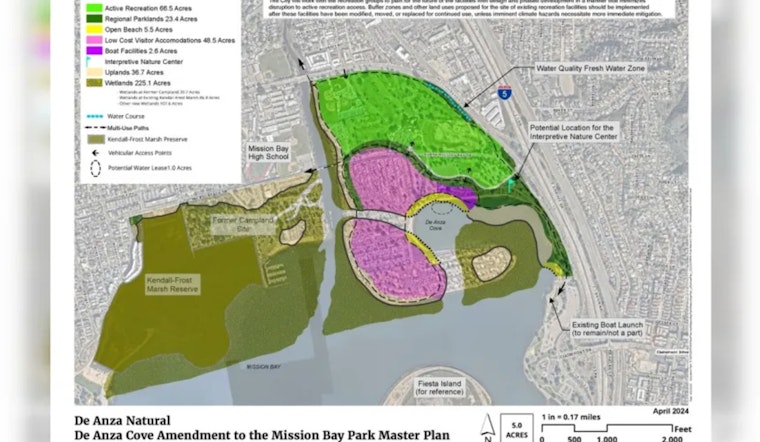
In a move signaling San Diego's commitment to balancing recreational needs with environmental conservation, the City Council has given the green light to the De Anza Natural amendment. This comprehensive plan is set to transform De Anza Cove by not only enhancing recreational facilities but also by revitalizing the area's natural wetlands. The city's announcement detailed the unanimous decision, with policies aiming to ramp up defenses against climate change effects such as sea-level rise.
Touting the council's decision, Mayor Todd Gloria was quick to highlight the broader implications of the approval for the area's future. "The unanimous approval of the De Anza Natural amendment marks a significant milestone in our years-long effort to preserve and enhance one of San Diego's most beloved recreational areas," Gloria asserted in a statement. The plan purports to seamlessly merge habitat restoration with maintaining De Anza Cove as a hub for leisure and low-cost tourism. Hopes are high to aggressively push forward this environmental initiative, despite the anticipated long-term challenges.
Heidi Vonblum, the City Planning Director, confirmed an inclusive approach, emphasizing the plan's reflection of community and stakeholder input. "We look forward to seeing De Anza Natural come to life with a balance of recreational uses and wetland habitat, all while preparing for the effects of climate change," she conveyed to stakeholders. According to city planning officials, the process of public engagement has been long and inclusive, dating back to 2018, with extensive outreach and incorporation of public feedback into the final proposal.
Before becoming fully operational, the amendment will have to jump through one more bureaucratic hoop—approval by the California Coastal Commission. But once past that hurdle, the plan is to swiftly start implementing a slew of recreational and environmental features. Alongside new trails, a nature center, and water-based activities, the project promises to keep the area thriving with a mix of sports and camping facilities. The city hasn't overlooked the significance of public opinion and intends to continue harnessing it through additional workshops and meetings.
Amidst the renewed excitement for the future of De Anza Cove, the plan also includes a significant partnership with the Kumeyaay Nation to ensure the area's cultural importance is woven into the fabric of the restoration. Although the roll-out of these sweeping enhancements is expected to occur in gradual phases, the interim period promises that current recreational activities will remain available for community members and visitors to enjoy.
The bold environmental strategy, part of a broader city blueprint combating climate change, earmarks a hefty increase in wetland territory—from the original 80 acres designated in the Mission Bay Park Master Plan to a proposed 143 acres. This move is firmly in line with San Diego’s Climate Action Plan and the Climate Resilient SD initiative, embedding strong ecological intentions into the city’s urban development narrative.



