

























































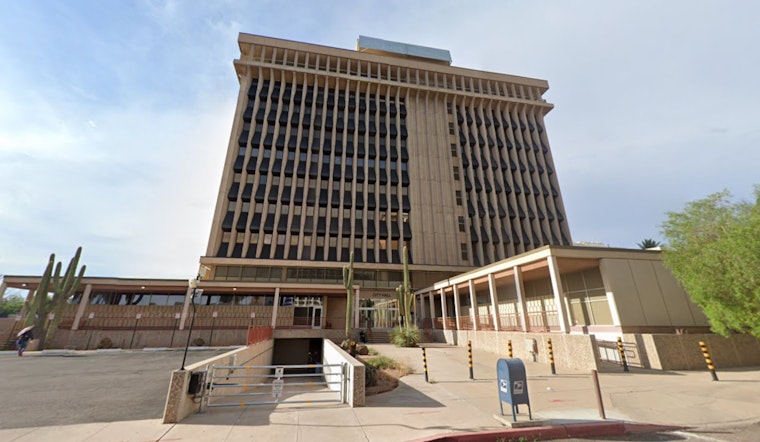
In a move to tackle the opioid crisis head-on, Pima County and the City of Tucson have voted unanimously to unite their efforts and resources. Announced on Tuesday, May 7th, the new agreement spans five years, merging opioid litigation settlement funds to spearhead initiatives designed to curb the spread of illicit opioid use and its devastating impact on individuals and communities.
The agreement comes hot on the heels of both parties, passing resolutions to designate fentanyl abuse a public health crisis, officials said. Spearheaded by the Pima County Board of Supervisors and the Tucson Mayor and Council, the regional plan aims to combat a problem that transcends neighborhoods and touches the lives of countless citizens, "Pima County and the City of Tucson joining efforts to declare illicit fentanyl use as a public health crisis creates the cross-jurisdictional relationships needed to save lives," said Board of Supervisors Chair Adelita Grijalva in a statement obtained by Pima County Newsroom.
Statistics from Pima County indicate an alarming trend, with an average of approximately 500 overdose deaths annually over the past three years, 60 percent of which are fentanyl-related. Beyond the mortality rate, the ripple effects of addiction have surged, leading to an uptick in law enforcement action, increased homelessness, and undue pressure on healthcare and social services.
The pooling of resources is part of an ongoing partnership under the One Arizona Distribution of Opioid Settlement Funds Agreement, which began in 2021. Pima County is set to receive over $100 million, spread out over 18 years. The current allocation sees Pima County receiving 72 percent of the funds; Tucson, 23 percent, while Marana, Oro Valley, Sahuarita, and South Tucson will split the remaining 5 percent. As of now, "The County has received more than $17 million for allocation to the region," Pima County reported.
The unified strategy includes the development of a regional awareness campaign on mental health, the formation of a cross-sector response team, collaboration with diverse community organizations to provide support, the delivery of Medicated-Assisted Treatment in non-hospital settings, and multilingual outreach efforts. Tucson Mayor Regina Romero told Pima County Newsroom, "We can't enforce our way out of this problem. The City of Tucson and Pima County are working to bring down silos and bring together the necessary resources to combat fentanyl and opioid misuse in our community.”
The Health Department of Pima County leans on its Community Mental Health, Addiction, and Injury Division to lead the charge with strategies and collaborative partnerships for reducing drug use and associated consequences. Efforts include overdose prevention training, the distribution of Narcan, and services such as Lifepoint syringe access and Dispose-a-med program for prescription drug disposal.
In addition to these settlement funds, Pima County has garnered a significant CDC Overdose Data to Action program grant to bolster its strategies against the opioid epidemic with technology and better data collection. Similarly, Tucson is implementing solutions including the Community Service Officers program, Housing First, and other programs to ensure comprehensive support is available to those struggling with addiction.
The cooperative effort outlined in the County-City IGA is set on a renewable basis, potentially extending their collaboration for up to 15 additional years beyond the initial term.



