

























































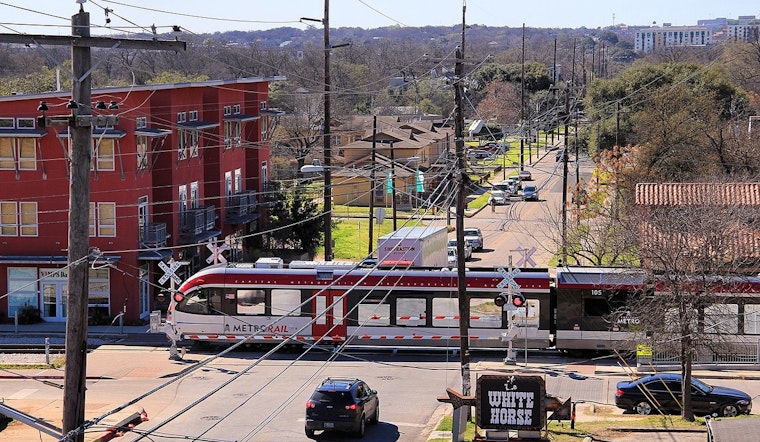
As the City of Austin braces for a pivotal legal confrontation, the culmination of tensions surrounding the Project Connect light rail endeavor looms over a community at the crossroads of surging growth and transit evolution. The much-contested Project Connect, which encompasses a comprehensive plan for a new light rail system, is set for judicial scrutiny on Monday.
Austin Transit Partnership (ATP) and the city are pitted against Attorney General Ken Paxton's office and a coalition of opponents, including local business Dirty Martin’s, in a fraught disagreement over the validation of voter-approved bonds crucial for funding the rail system. Sources indicate that this showdown in Travis County Judge Eric Shepperd's courtroom could shape Austin's aims to redefine its transportation infrastructure, as reported by the Austin Monitor. Central to the debate is a dispute over judicial authority to decide on bond validation, with both sides entrenched in their convictions over the court's jurisdiction.
In a statement obtained by the Austin Monitor, Casey Burack, executive vice president for business and legal affairs at ATP, is adamant about the legitimacy of the bond validation suit, asserting the compliance of ATP and the City of Austin with legal norms. "We filed bond validation proceedings earlier this year to get an expedited ruling from an impartial judge, and we look forward to our day in court," she emphasized.
However, the stakes transcend the courtroom's legal nuances. Should Project Connect's detractors triumph, Austin stands to forfeit a constellation of assets. The Austin American Statesman lays bare the broader implications: a blow to mobility freedom, the loss of potentially billions in federal funds, crucial housing opportunities, and the prospect of more walkable, less car-dependent neighborhoods. Particularly in a city like Austin, where the currents of population swell and vehicular congestion meet, transit alternatives such as Project Connect offer paths to a more navigable future.
Notably, Project Connect was met with resilience by Austin voters back in 2020—a reflection of a metropolis poised for modernization and proactive in its approach to future-proofing its urban blueprint. The ongoing legal strife is but a symptom of a deeper ideological divide, a tension between a collective vision for a connected Austin and an abiding skepticism about the mechanics and economics of such epic undertakings.
Regardless of which viewpoint prevails in this upcoming trial, one element remains indisputable: Austin's trajectory as a vibrant and forward-thinking city is indelibly tied to the fate of Project Connect. Thus, as the city waits with bated breath, eyes will be trained on the Travis County Courthouse come Monday morning.




