

























































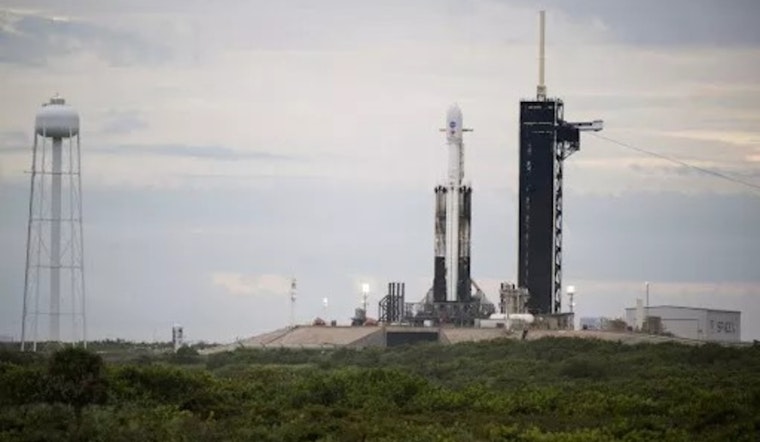
Later this month, the skies over Florida's coast are set to light up with the final launch in the Geostationary Operational Environmental Satellite (GOES) series. According to information obtained by KXAN, the GOES-U satellite is scheduled for departure on June 25 from the John F. Kennedy Space Center, hitching a ride on a SpaceX Falcon Heavy Rocket. This satellite aims to continue the legacy of its predecessors, delivering critical data for monitoring severe weather, aiding search and rescue missions, and contributing to meteorological research.
SpaceX isn't just to send up the last of the GOES series; they're also prepping for another high-stakes test flight of the Starship in Texas. The planned lift-off is set to occur from SpaceX's own Starbase near Boca Chica. According to Austin American Statesman, this marks the fourth instance Starship will soar and aims to fundamentally test the reuse and controlled reentry of the spacecraft. Previous attempts have seen a mix of failures and partial successes, yet SpaceX seems determined to eventually fully safely bring Starship back to Earth—this time targeting a soft splashdown in the Gulf of Mexico.
The upcoming GOES-U satellite, set to be rechristened as GOES-19 once in orbit, is not merely a tool of observation—it's a sentinel perched 22,236 miles above, watching over us from the west coast of Africa to a large stretch of North America. It will be instrumental in revealing the early formation of severe weather systems, tracking marine heatwaves that disrupt marine ecosystems, and identifying the threads of wildfires. The data it's to collect promises to enhance forecast accuracy and extend the lead time for severe weather warnings, which could save lives and mitigate property damage.
Meanwhile, the Boca Chica-hailing Starship test, accessible to watch via a live webcast on SpaceX's website or the social media platform X, looks to improve upon the past year's tests, which have admittedly seen Starship battle—and not always conquer—the fiery gauntlet of reentry. This ongoing dance with the atmosphere's edge is part of SpaceX's larger goal to create a vessel capable of voyaging farther than ever before, with sights set as distant as the moon. As stated on their website, despite prior setbacks, each test is a step forward in forging rockets that can repeatedly ply the cosmic shores with reliability.
As these two ventures readapt to the heavens, they offer unique contributions to our understanding and survival here on Earth. Where GOES-U will vigilantly monitor our planet's many moods, SpaceX’s Starship carries forward the dream of space exploration that has long been bound up with our species' ambition and curiosity. Together, they represent human persistence and innovation—striving to leave no stone unturned, whether it lies at the bottom of the ocean or rests on the lunar surface.




