

























































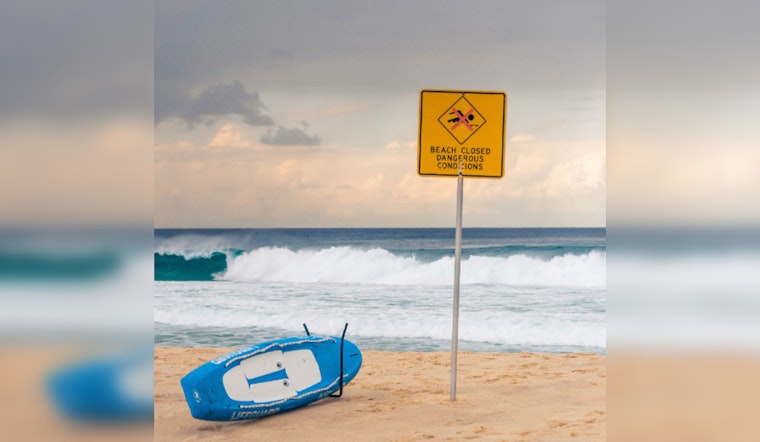
As Massachusetts residents gear up for beach season, nearly 20 of the state's beaches have seen an abrupt suspension of aquatic festivities due to concerning levels of bacteria. Patch reported Tuesday that from the rolling landscapes of Great Barrington to the urban shores of Lynn, swimmers are being cautioned to stay dry. Out of the 81 freshwater and saltwater beaches recently opened by the Massachusetts Department of Conservation and Recreation to herald the summer season, a significant fraction remains off-limits just after Memorial Day weekend.
According to the dynamic information served up by the state's beach water quality dashboard, nearly 20 beaches have been marked with red "no swimming" signs, a warning signaling the presence of excessive bacteria. Beachgoers like Billy Caguana and his family, eager to plunge into Hopkinton Reservoir, were met unexpectedly with these advisories on Monday. Phil Mason, yearning for the embrace of the outdoors over the containment of indoor pools, expressed his disappointment to CBS News Boston, saying, "I am very disappointed. I'd like to be able to swim outdoors rather than indoors."
As to the bacteria blight's cause, the onslaught of human progress and weather appear intertwined. John Rumpler, Clean Water Director for Environment Massachusetts, laid bare the core issues in a statement obtained by CBS News Boston, stating that, "It's either runoff pollution or sewage overflows." He explains, "When we have heavy rains, and then we have a lot of fertilizer and oil and grease and pathogens on the ground, all of that runs off into the Charles River and the tributaries and streams that feed that beautiful river." The state is said to be rigorously testing the waters, from the week before Memorial Day through to Labor Day, to ensure safety.
Beaches designated as unsafe pose various risks – the Massachusetts Department of Public Health warns of potential gastrointestinal, respiratory, dermatological, as well as eye and ear symptoms, not to mention those reminiscent of influenza. As families found they could not immerse themselves at popular spots like Cochituate State Park Beach in Natick, due to the toxic intrusion of harmful cyanobacteria colloquially known as blue-green algae, officials are calling for action to mitigate these bacterial invasions.





