

























































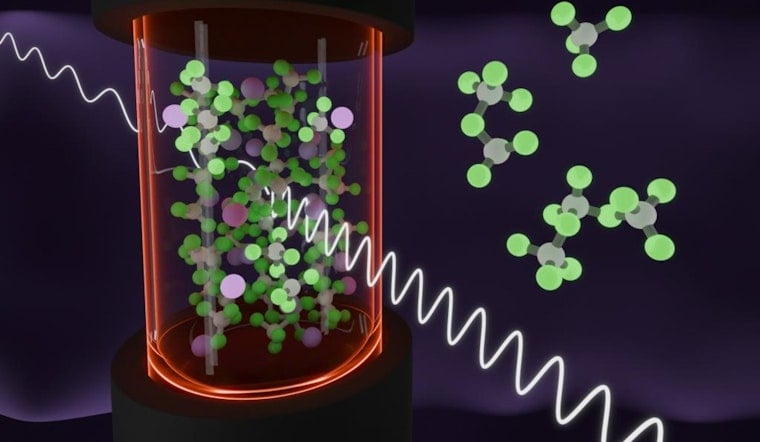
In a step forward for the world of energy applications, a team from Oak Ridge National Laboratory has shed light on the chemical behavior of molten salts, substances critical to various high-temperature industrial processes. The molten salt mixture in question, composed of aluminum chloride and potassium chloride, is a key player in improving the efficiency and durability of batteries, among other applications. The Oak Ridge team’s insightful research was reported on June 14th.
The findings could pave the way for the development of new materials resistant to corrosion, a major challenge when dealing with highly reactive environments such as those encountered in molten salt reactors. Publications from the Chemical Separations group of Oak Ridge revealed that the scientists used advanced supercomputing techniques to map out the interactions at the electronic level for "nanoseconds of electronic-level simulations." These simulations exposed the formation, evolution, and disintegration of various reactive species over time. According to Vyacheslav Bryantsev, the group's lead, “Understanding the behavior of molten salts in reactive environments is very challenging,” a sentiment that underlines the significance of this latest research contribution.
The methodology employed by the researchers involved modeling the vibrational spectra of the salts, a more precise approach to identifying the distribution of ionic species compared with other methods. Complementing the vibrational analysis was their use of rate theory, allowing them to discern how and when ions rearrange themselves to form new compounds. Santanu Roy, who co-led the work, said, “Modeling of vibrational spectra allowed us to determine the distribution of key ionic species in the salt compositions more precisely than other methods, while a rate theory of ion exchange helped us better understand how and at what rate ions reorganize to form new species.”
The implications of these findings are far-reaching, with potential benefits extending to energy storage and generation systems including high-temperature batteries, solar power plants, and nuclear reactors. The detailed understanding of ion exchanges and the formation of chemical species offered by the Oak Ridge team's work provides valuable insights that could lead to more efficient, cost-effective, and sustainable energy technologies. This work stands as a testament to the importance of fundamental scientific research in the drive toward advancing modern energy solutions, a journey equally fraught with challenges and opportunities.


