

























































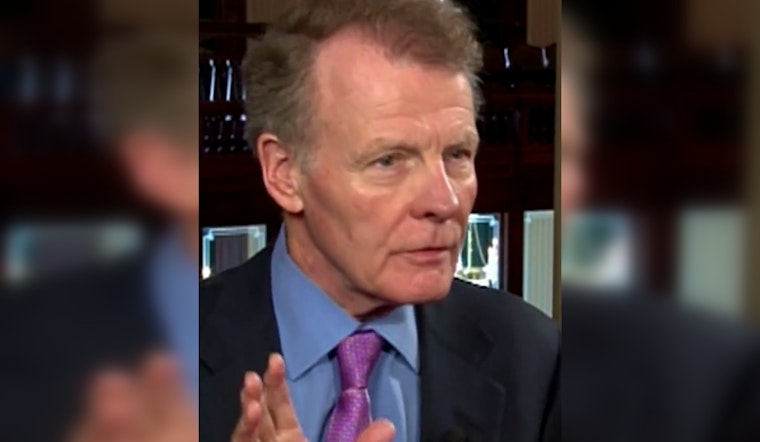
The legal labyrinth in the case against former Illinois House Speaker Michael Madigan recently became more convoluted with a Supreme Court decision that could sway the forthcoming corruption trials in Chicago. As reported by the Chicago Sun-Times, the U.S. Supreme Court has ruled that the federal bribery statute in question does not cover gratuities, potentially altering the legal footing of the allegations against Madigan and his associates.
With Madigan's trial postponed until October, the Supreme Court's accusation that prosecutors turned the law into "a vague and unfair trap for 19 million state and local officials" threatens to reshape the battle lines in the courtroom. While the ruling originated from the conviction of former Portage Mayor James Snyder, the reverberations are felt deeply in Madigan's case, wherein, as the Sun-Times illuminated, seven of the 23 counts he faces are tethered to the scrutinized statute.
Simultaneously, Madigan's defense team is gearing up to challenge the notion of a conspiracy, asserting there's no evidence their client was privy to or engaged in unlawful actions. The former speaker's lawyers contend that others may have maneuvered to influence Madigan, but an involvement in such schemes does not reside with him. According to arguments obtained by the Chicago Tribune, Madigan's defense emphasized that there was "no agreement to commit a crime," signaling their strategy to decouple Madigan's actions from any alleged misconduct.
The complexities surrounding the testimony of former state Rep. Eddie Acevedo amplify the uncertainties in the case. As Madigan's lawyers have pointed out, despite plans for Acevedo to testify, his "competency issues" cast doubt on his potential contributions. In addition, Madigan's team holds "a good faith belief that the government has no intention whatsoever of calling (Acevedo) as a witness," as per a footnote in their filing covered by the Tribune.
However, with over 250 undercover recordings said to be in the prosecution's arsenal, including ones where Madigan purportedly speaks to terms of quid pró quó, Madigan's discourse is set to become a courtroom focal point. In defense filings, the argument is made that even when prompted by the government, Madigan sidestepped the implication of a quid pro quo. Prosecutors will be attempting to demonstrate corrupt intent on Madigan's part by leveraging evidence of possibly influenced legislative decisions, while the defense seems prepared to portray any interactions as devoid of criminal intent or knowledge.
Ultimately, as both sides crystallize their narratives, the shadow of Madigan's considerable legacy looms over the proceedings. Once an emblem of longevity and power in the legislative domain, the former speaker now navigates a terrain reshaped by judicial scrutiny and interpretations of intent, where the legality of past exchanges and the implications of gratitude and exchange in the corridors of power are under the microscope.





