

























































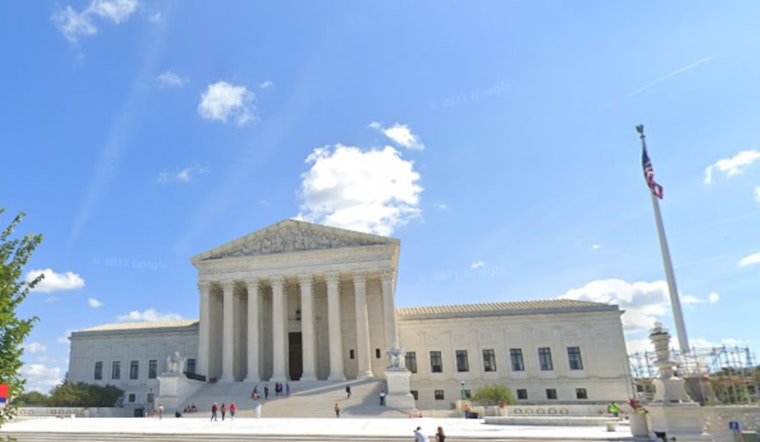
The tides of democratic process in Georgia have seen a stillness as the U.S. Supreme Court declines to wade into the waters of a case accusing the state's unique method of electing utility regulators of diluting the influence of Black voters. This Monday, the highest court underscored its stance by turning away arguments that could revitalize the paused elections for Georgia's Public Service Commission. A trek towards district-based elections, proposed as a corrective measure against alleged statewide vote discrimination, will now remain uncharted territory.
According to a report by WABE, the rejection is set to pave the path for an election resumption, previously stalled by the lawsuit's proceedings. The 11th U.S. Circuit Court of Appeals dismantled a lower court's notion of discrimination last November, signaling that the method Georgia employs in choosing its government for the Public Service Commission does not contravene federal laws. "We’re obviously very disappointed that the Supreme Court chose not to take up the case," Bryan Sells, a lawyer for the challengers, told WABE.
The scenario in Georgia, a state where local governments with sizeable Black populations and at-large election systems often face legal opposition, is indicative of a broader struggle. Historically, these challenges culminate in verdicts favoring district voting as a means to remedy the exclusion experienced by Black voters. Despite these precedents, Georgia's Public Service Commission, an all-Republican panel that oversees the economic dictates of energy companies like Georgia Power, continues to operate without fresh elections due to the pending lawsuit.
Observing the legal lacuna, Georgian lawmakers, perhaps prodding the bounds of foresight or opportunism, have appended two extra years to the commissioners' terms earlier this year. This maneuver, while perhaps constitutionally sound, strikes a discordant note when viewed against the backdrop of an effort meant to ensure balanced representation. It has led to a bureaucratic limbo that has consolidated more years in office for the commissioners without the peoples’ electoral voice. The commission, which has recently sanctioned rate hikes for Georgia Power, now finds its members such as Tim Echols and Fitz Johnson lingering in office, with election dates pushed to 2025 and beyond.
Contemplating their next steps, the plaintiffs have yet to decide whether to implore U.S. District Judge Steven Grimberg to intervene against the law and fast-track elections on an alternative schedule, as per WABE. Meanwhile, Mike Hasinger, spokesperson for Georgia Secretary of State Brad Raffensperger, stated that the state anticipates elections to resume in 2025. The extended terms for commissioners Echols, Johnson, and others effectively redistribute the electoral calendar, which could prevent a shift in the commission's political composition in a single election. As it stands, the fate of the commission's control remains suspended in a temporal drift of extended terms and unresolved contentions.





