

























































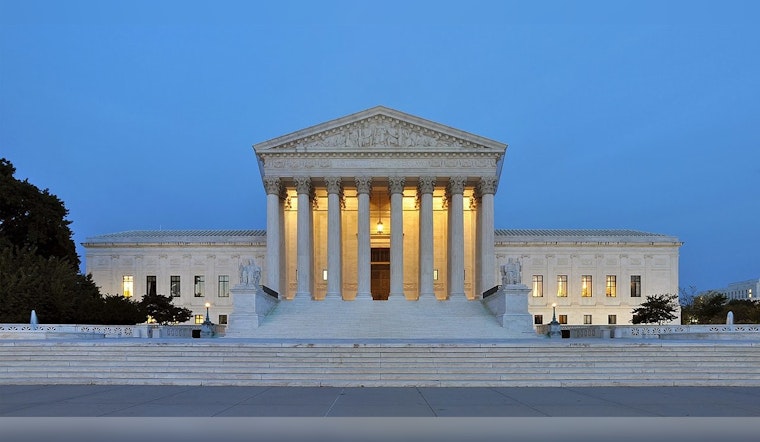
In a recent ruling that tips the scales in favor of Native American autonomy over healthcare, the U.S. Supreme Court has handed down a decision that will have the federal government picking up millions in additional costs for healthcare programs managed by tribes. This 5-4 decision echoes a pursuit of a more localized control over such programs, as reported by Arizona Public Media. Chief Justice John Roberts, in his majority opinion, pinpointed covering these overhead costs as critical to averting a funding shortfall, saying it prevents tribes from suffering a “pay a penalty for pursuing self-determination."
On the flip side, the Department of Health and Human Services failed to convince the high court that it wasn't on the hook for the administrative costs associated with billing for insurance, Medicare, and Medicaid, a task usually managed by other entities when the government is in charge of the healthcare programs, not covering those costs could stack up to somewhere between $800 million and $2 billion annually, just as a heads up. Justice Brett Kavanaugh in the dissent, joined by Justices Clarence Thomas, Samuel Alito, and Amy Coney Barrett, fretted over the implications of the ruling and suggested that the tussle over such appropriations is better left to the legislative prowess of Congress, according to the same report.
Assertions from both the San Carlos Apache Tribe in Arizona and the Northern Arapaho Tribe in Wyoming spotlighted the underfunded state of healthcare provided by the Indian Health Service, with per-person spending by the IHS being a mere third of what the federal government spends elsewhere in the United States. The average life expectancy within these tribal populations hovers around 65 years, markedly lower than the national average, these concerns were highlighted in court documents.
Attorney Adam Unikowsky, representing the Northern Arapaho Tribe, saw the decision as a leveling of the playing field, stating that it would not only promote tribal sovereignty but also amass resources for health care in under-served communities. The tribes, which had previously contracted with IHS for healthcare services ranging from emergency to substance abuse treatment, found themselves overwhelmed by overhead costs — nearly $3 million for the San Carlos Apache Tribe over three years and $1.5 million for the Northern Arapaho Tribe over two years, a substantial financial burden that the prior arrangements did not account for; whereas the Department of Health and Human Services contended that tribes are already receiving some funds for overhead but are not entitled to monies tied to third-party incomes, this according to the Supreme Court filings.





