

























































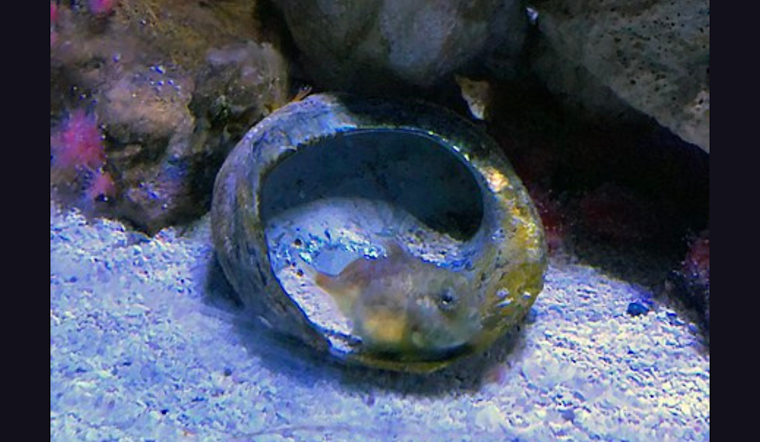
The Birch Aquarium at Scripps is hosting a unique group of sea creatures that could easily be mistaken for a child's bath toy at first glance. They are much more than that. We're talking about the Pacific Spiny Lumpsuckers, globular little fish making a big splash with their incredulous adaptive traits and fascinating biology.
Describing them only scratches the surface: they're small, spiky, and spherical with a special set of pelvic fins that have evolved into a sucker-like apparatus allowing them to cling to rocks and algae, as Birch Aquarium's blog reports. This nifty trick ensures they aren't whisked away by the whims of the ocean's currents, and it's quite the sight to see.
Not just a single-use accessory, the sucker feature is complemented by protective enamel armor; these are not your average fish scales, mind you. According to the same source, their "spikes," or odontodes, are composed of the same material found in our teeth and spiral uniquely for each fish, a testament to their journeys through the marine world, even if they don't regrow when damaged.
Dive deeper into their biology, and you'll discover an enchanting display of sexual dimorphism at work—the males are dainty, red delights. At the same time, females loom larger and don earthier tones of green to brown, the blog delightedly points out. It's not just size and color that set these sexes apart; males are the true glow-getters of the species, bio-fluorescing with a red hue rare in marine circles, flaunting a vivid combo of red and green-yellow that's scientifically alluring.
Birch Aquarium also sheds light on the spiny lumpsuckers' reproductive practices, where male fish are devoted fathers, tirelessly guarding nests often concealed in snug makeshift homes like barnacles. The success of the aquarium's breeding program is noteworthy—they've sent ripples through the aquarium community by distributing 275 lumpsuckers across the nation and hatching two egg clusters, resulting in roughly 250 babies. Sort of like lumpsuckers to the sea, these efforts not only bolster the captive population but also ease the pressures faced by their wild counterparts, so more of us land-dwellers can marvel at these diminutive wonders.



