

























































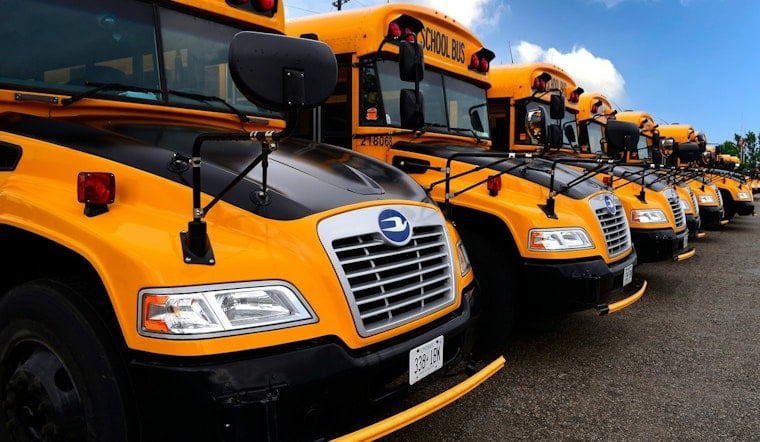
Amidst the ongoing navigation through the choppy waters of a post-pandemic world, Chicago Public Schools (CPS) have been wrestling with the ripple effects of a bus driver shortage, a problem that has its roots deeply planted in the disruptions caused by COVID-19. As this issue persists, CPS officials have confirmed that general education students, including those attending selective enrollment and magnet schools, are unlikely to find bus transportation guaranteed for the next school year. The district has had to make the tough call to prioritize special education and homeless students for bus services, as mandated by state and federal law. Fox32 Chicago reports.
As the CPS grapples with routing strategies, a proposal for a "transportation hub" system is on the table, promising a ray of hope for families. In a district teeming with thousands of students, affected by these transportation challenges, CPS CEO Pedro Martinez, outlined the concept at a recent Board of Education meeting. These hubs are intended to allow general education students to board a bus at a school near their home to be transported to their assigned institution and vice versa. However, this won't be a solution at the start of the school year; it's a development expected to materialize during the school year's first quarter. "We hope to open our first hub stops during the first quarter and continue to expand them throughout the school year," Martinez said in a statement obtained by the Chicago Sun-Times.
While this hub system could theoretically streamline transportation for many, it doesn't come without its complications. Logistics and equity considerations have surfaced, casting shadows of doubt over its feasibility. CPS spokeswoman Mary Fergus noted the system "faced logistical and equity issues that made addressing this suggestion a challenge," indicating that hubs could serve some but not all routes fairly, leaving equity for all families and schools up in the air. Despite these roadblocks, CPS remains committed to exploring all options available.
The transportation quagmire has left many families in a lurch, particularly for those from lower-income backgrounds who may not have the means to secure alternative transport modes. Last year, general education students were stripped of their busing services, and now, CPS faces a similar scenario. Parents, backed by 26 alderpersons, have written a letter pressing for changes, "Given that 85% of the students without transportation come from low-income families, many cannot afford to pay for private transportation, nor should they be expected to do so," as conveyed to the CPS officials. Yet, the district has deemed that offering stipends to general education families "is not sustainable for CPS," particularly when wrestling with a gargantuan $391 million budget deficit.
To attract more bus drivers, CPS has amped up its efforts, boosting the hourly wage and embarking on an advertising spree across social media and urban landscapes, with billboards and public transits plastered with job openings. They are also seeking waivers for certain hiring requirements, like the mechanical test for engine parts identification, which, according to CPS, some other districts and states have managed to bypass. Each stride taken, each solution churned out, represents the district's unyielding quest to straighten out the tangled cables of its transportation system and ferry its students towards shores of consistent and reliable education access.





