

























































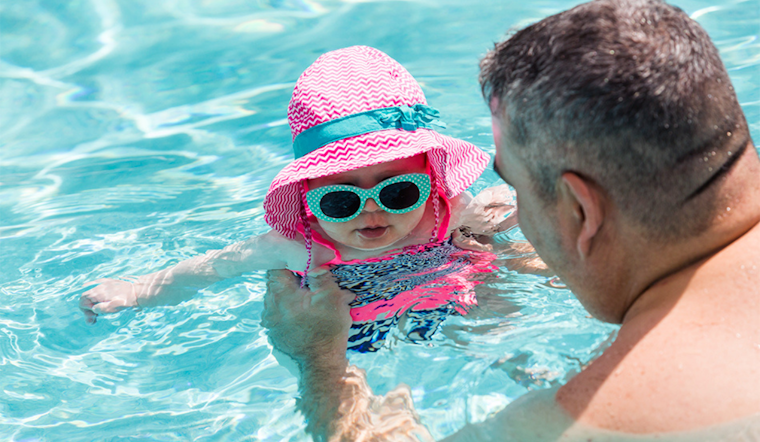
When we're kicking back on the beach or taking the kiddos out to the park, the last thing we're probably obsessing over is if our sunglasses have 100% UV protection. But maybe we should be, because according to the City of Arlington, Texas, it turns out that not all shades are created equal—and those UV rays are no joke for our eyes.
Kids are more at risk for retinal damage from UV rays. "The lens inside a child's eye is clearer than an adult lens, enabling more UV to penetrate deeper into the eye", the City of Arlington, Texas points out. On a list that no one wants to top, cataracts and skin cancer in the eye neighborhood are among the delights that too much sun can serve up. And look, while the sun does its bright thing all year round, it's overachieving in the summer months, so extra caution is the name of the game.
So, here's the drill: grab shades that proudly boast blocking 99-100% of both UVA and UVB light. UVA rays, the ones that make you look older faster and skin cancer more likely, are the same ones that tanning salons love. UVB rays, on the other hand, are the ones that'll cook you up a nice sunburn. To stay out of the frying pan, the American Red Cross recommends being especially wary near reflective surfaces like water, snow, and sand—these sneaky mirrors can boost your chances of a burn and damage those peepers.
Let's not forget about hats, people. Wide-brim hats that will cover the entire face, especially the eyes, are the way to go. And don't think you can skimp on sunscreen for your face. When the clock strikes between 10 a.m. and 4 p.m., seek shade because that's showtime for the sun's razzle-dazzle. Taking these everyday precautions might not be as sexy as a summer tan, but they're your best bet for keeping your eyeballs healthy.




