

























































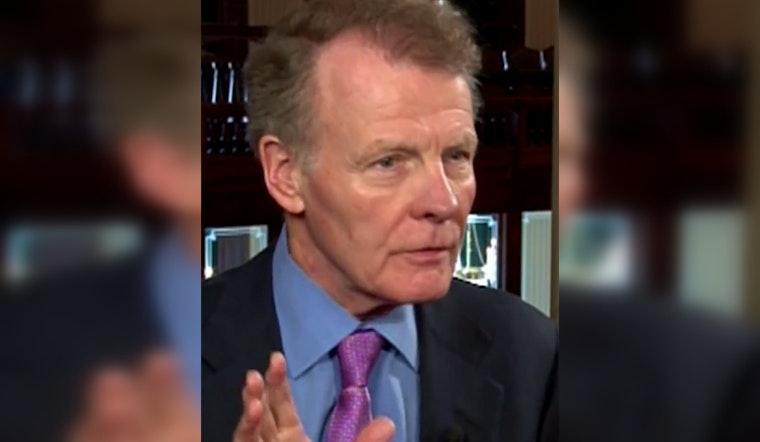
Following a recent Supreme Court decision, attorneys for former Illinois House Speaker Michael Madigan have filed a motion aiming to dismiss 14 charges from his indictment, arguing the legal foundations of these charges have been weakened, the Chicago Sun-Times reported. The legal team's argument leans heavily on the high court's distinction between bribes and gratuities, with the latter now excluded from criminal liability under federal anti-bribery law referenced in the Supreme Court's ruling in the case of former Mayor James Snyder of Portage, Indiana.
Madigan, who departed from office in 2021, is accused of orchestrating schemes to consolidate political power and financially benefit associates over nearly a decade. However, his lawyers counter that many of the alleged official acts occurred before the purported hiring of Madigan allies by ComEd, which the defense suggests couldn't constitute the quid pro quo required for bribery charges, the Supreme Court set a precedent that may upend this prosecution because gratuity, which they assert was the nature of Madigan's interactions, is notably distinct from bribery which involves a corrupt intent, according to the Chicago Tribune.
Implications of the Supreme Court decision are far-reaching; they may influence not only Madigan's case but also the cases of his four associates, known as the "ComEd Four," who were convicted last year of conspiracy in an alleged bribery scheme, with sentencing delayed because the high court’s decision meaning these proceedings now face an uncertain future and it appears likely that Madigan’s trial will illuminate these issues further, the lawyers accused the prosecution team of misinterpreting the federal statute, leading to erroneously charged cases, as per the Chicago Tribune.





