

























































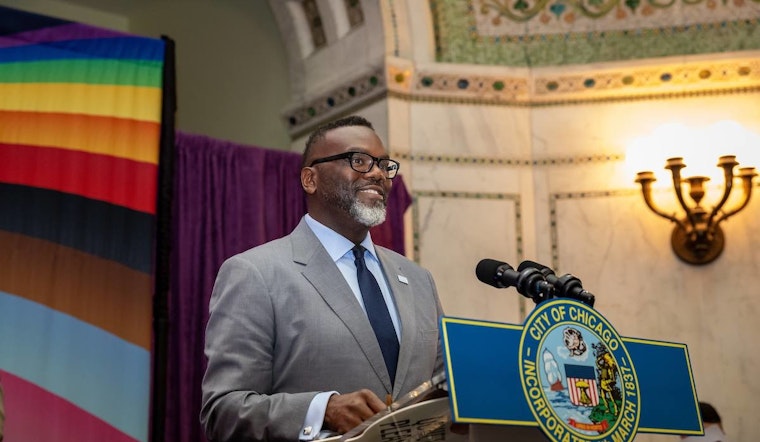
Over a year into his term, Chicago Mayor Brandon Johnson continues to draw notable support from labor unions, with his campaign raising $2.6 million, nearly half of which came from various labor organizations. This financial backing includes contributions from new union donors such as the Laborers' International Union of North America's local chapter and the Mid-America Carpenters' Union, each contributing $200,000, as reported by the Chicago Tribune. Johnson's inauguration was marked by the presence of labor support, with figures such as Randi Weingarten, president of the American Federation of Teachers, and Chicago Teachers Union President Stacy Davis Gates showing visible support.
Simultaneously, Mayor Johnson has displayed a push towards building relationships with the business sector, a move met with skepticism from those who view his union-tied ascent with caution. In attempts to dispel doubts by the business community, Johnson highlighted his administration's business-friendly initiatives like the O'Hare International Airport expansion, as per an interview with Crain's Chicago Business. Despite not seeking significant new or increased taxes, Johnson remains optimistic about fulfilling his promise of finding $800 million for his progressive city agenda.
However, the mayor's initial legislative agenda which passed laws to improve worker benefits was met with opposition, and other proposed measures such as an effective ban on natural gas in most new buildings face uncertainty. Jack Lavin, president and CEO of the Chicagoland Chamber of Commerce, acknowledged an "extended learning curve" in the mayor's relationship with business leaders but also evidences a pivot in favor of a pro-growth agenda.
Underlining this balancing act, Johnson has relied on creative financial mechanisms to fund his initiatives, exemplified by issuing $1.25 billion in new bonds to support affordable housing and economic development, without new taxation. Ald. Carlos Ramirez-Rosa, according to Crain's Chicago Business, praised the administration's creativity, but also pointed out that "we still need more funds to address the housing crisis that exists in our city."
On a different note, outside the realm of political machinery, musician Lil Durk's $150,000 donation to Johnson's campaign attests to the mayor's reach beyond traditional power structures. This connection reinforces Johnson's image as a figure capable of marrying the muscle of labor with the broader cultural tapestry of Chicago, especially when remembering his attendance at events like Durk's "Financial Literacy Event" co-hosted with the City Treasurer's office.
The financial landscape of Johnson's mayorship comes with its complexities. For instance, Leaders for Tomorrow PAC, which has connections to city contractors, contributed $74,000 to Johnson, which adds a layer to the conversation on campaign finance ethics. Amid refunds totaling $72,602, following concerns over potential ethics rule violations, Johnson's spokesman underlined the campaign's compliance efforts and broad-ranging support.





