

























































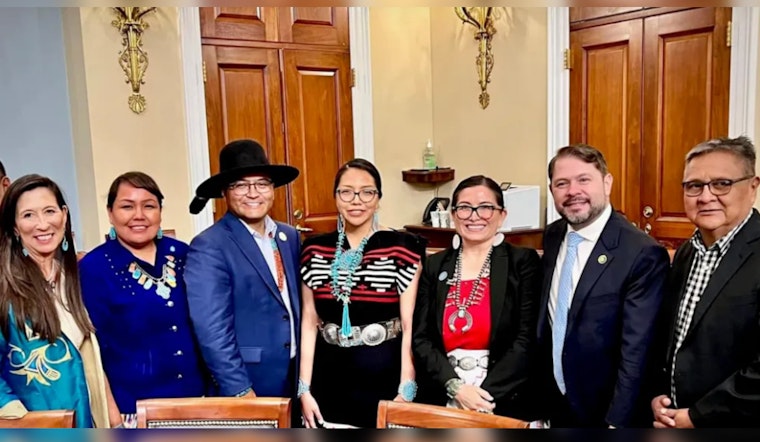
In a concerted effort to address critical water rights issues, Navajo Nation President Buu Nygren and his delegation have descended on Washington, D.C., advocating for the Northeastern Arizona Indian Water Rights Settlement Act this week. According to a statement obtained by the Office of the President and Vice President of the Navajo Nation, the delegation took the floor Tuesday, where President Nygren testified before the House Natural Resources Committee Subcommittee on Water, Wildlife and Fisheries.
The Navajo Nation's push for the settlement, joined by both tribal and non-tribal parties, urges Congressional action amid a severe drought rattling the Southwest. During his testimonial, as per statements from the Navajo Nation, President Nygren highlighted the settlement's importance, which teeters on securing a future where tribal communities can sustain their lifestyles, agriculture, and economic development against a background of increasingly scarce water resources. Joining the President were his wife, First Lady Jasmine Blackwater-Nygren, along with key tribal leaders and Arizona representatives, amplifying a message of unity and pressing need.
At the heart of the discussion is a settlement that aims to rectify long-standing disparities regarding access to clean water for tribal members. Navajo Nation Washington Office Director Justin Ahasteen conveyed the gravity of the circumstances, “The settlement aims to provide the certainty needed for these efforts to ensure that tribal communities can thrive despite environmental challenges.” With the Southwest facing a 25-year-long megadrought, the settlement has escalated in priority as a matter of resource management and community survival.
With eyes set on a September hearing, the delegation stressed the settlement's timely passage. As they aim to secure water rights for tribal communities, the settlement also promises a boost to the economic vitality of these regions. “Beyond immediate water access benefits, the settlement promises economic revitalization for tribal communities. With secure water rights, tribes can invest in agriculture, establish businesses and create jobs. This will drive economic development and improve the overall quality of life for their members,” explained President Nygren in a statement provided by the Navajo Nation. Achieving this, however, hinges on brisk legislative movement. Despite minor concerns over the tight timeline and the distractions of an election season, President Nyrgyz has called on Congressional offices to prioritize the bill.
The tribes involved in the settlement are advocating for prompt action, recognizing the profound impact the Northeastern Arizona Indian Water Rights Settlement Act holds for their future.





