

























































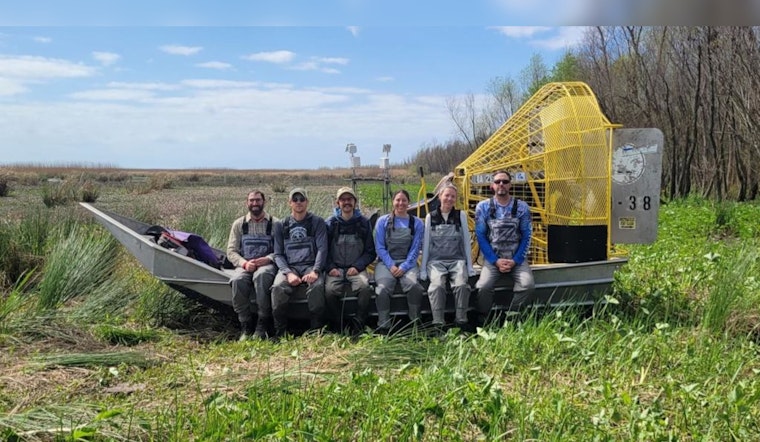
Shaping the future of coastal landscapes, scientists from the Department of Energy’s Oak Ridge National Laboratory (ORNL) are digging deep into the ecosystems where land gives way to ocean. With around 40% of America's population residing in coastal areas, which generate a staggering $10 trillion annually across various economic sectors, understanding these environments isn't just academic—it's essential for national resilience and prosperity.
ORNL's researchers are getting their hands dirty in coastal marshes from Louisiana to the mangrove swamps of Texas, pulling samples and data to feed into advanced Earth system simulations. These efforts are directed towards providing actionable intelligence for stakeholders to better anticipate and mitigate the challenges posed by climate change. As these ecosystems buffer the collective American shoreline against erosion and serve as critical carbon sinks, the stakes of this research are as clear as a sunny day at a California beach.
Elizabeth Herndon, a senior staff scientist at ORNL, is spearheading a research project to dissect how water level variations along Louisiana’s coast are affecting its environmental chemistry. According to a report by ORNL, the project focuses on two contrasting sites: one seeing a new delta formation, a landscape succumbing to increasing salinity as sediment supplies dwindle.
The significance of Herndon's research, part of her DOE Early Career Award project, lies in its potential to sharpen predictive models crucial for coastal management. Her efforts delve specifically into how freshwater and saltwater flooding influences the interplay between the nutrient phosphate and elements like iron and manganese. "The findings will improve predictive modeling capabilities," Herndon told ORNL, hinting at a future where predictions and precautions weave together to safeguard our coasts.



