

























































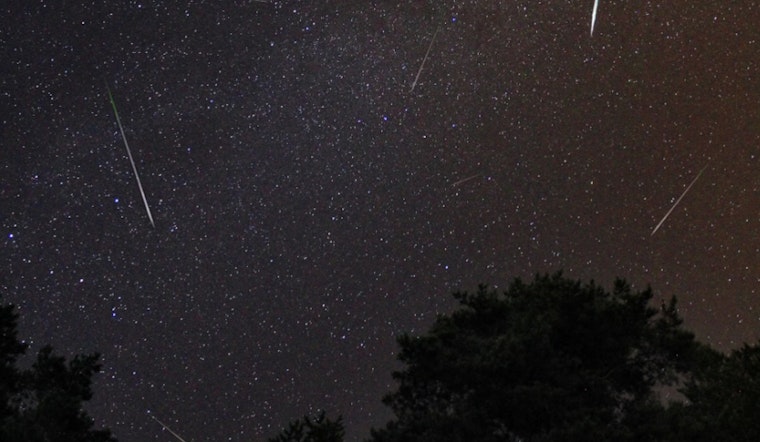
The Perseid meteor shower, an astronomical highlight of summer, began its annual display yesterday and will continue to grace the night skies until September 1. As reported by KENS 5, the shower is expected to peak on the night of August 12 into the early morning of August 13. Observers can anticipate a performance of 50-100 "fast, bright meteors" per hour during the peak period, with "straggler" meteors possibly appearing until August 18.
For those planning to witness this celestial event, it is noted, that the waxing crescent moon will be 43% illuminated and set around midnight on August 12, offering a darker backdrop for the remainder of the night – conducive to better meteor visibility. This information aligns with the guidance provided by both KENS 5 and a Forbes report, which also suggests taking advantage of the conditions by planning a night under the stars – preferably in an area free from light pollution.
While the prospects are promising for the Perseids this year, observers should manage expectations, as the meteor rates cited often refer to ideal conditions with a completely unobstructed view of the sky. This means, not everyone will catch the "150 per hour" figure that is sometimes quoted. According to Forbes, a more realistic count for an average observer would be about 50 meteors per hour.
No special equipment is needed to view the Perseids – just a spot away from city lights, a bit of patience, and maybe a comfortable chair. As Daisy Dobrijevic mentioned to KENS 5, "The best way to take in the shower is to find the darkest possible viewing place, lean back and watch as much of the night sky as possible." NASA also suggests that, the optimal time to watch is during the pre-dawn hours but notes that meteors may be visible as early as 10 p.m.
For more details on how to best experience the Perseids and the science behind this annual event, additional resources can be found on NASA's website as well as through online articles provided by space-focused publications.




