

























































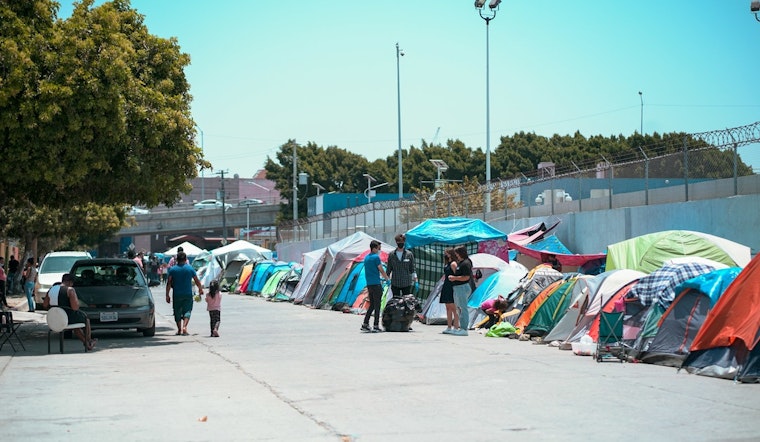
In the wake of President Biden's expedited removal policy at the southern border, migrant apprehensions have seen a sharp decline, down by more than 40% since the executive order took effect, yet this decrease has ushered in a troubling trend among border officials who are reportedly discarding migrants' personal belongings, according to a recent report by AZPM. Essential items such as baby formula, diapers, cell phones, and clothing are among the possessions being thrown away, leaving migrants in border towns like Nogales, Sonora, carrying only the barest of necessities.
The dispossession extends to deeply personal items; women report baby formula and cell phones trashed and men recount shoes discarded, the impact reverberates, a mother breastfeeding in a paper shirt told AZPM border officials disposed of her shirt and maternity bra without explanation. The influx of migrants into Sonoran towns appears to be a direct effect of the policy, which has increased the burden on local humanitarian organizations trying to provide for their basic needs.
Amidst these hardships, organizations like the Kino Border Initiative are stepping in to assist; Itzel, a woman who sought their help, shared with AZPM that officials discarded her and her family's belongings when they crossed into Arizona, leaving them without essentials. "They put everything in the trash," said Itzel, demonstrating the stark realities faced by migrants caught in the midst of policy and procedure.
Contrasting these reports, Homeland Security Secretary Alejandro Mayorkas has assured that taking belongings is done so for safety reasons and belongings should be returned upon removal from the country; yet "if there's a case where an individual has not had their property returned, I assure you that it's an aberration," he stated. However, findings from ProtectAZ Health, in collaboration with the ACLU, highlight a different story where 20% of surveyed migrants with specific medical conditions reported permanent confiscation of their medication, this disconnect between policy and practice is highlighted by a government watchdog's notice of inconsistency across border sectors.
Comprehensive reform appears on the horizon, with DHS committing to implementing measures recommended by the Government Accountability Office, which includes clearer guidelines for handling personal property and establishing an oversight mechanism, purportedly to be acted upon by year's end. The commitment by DHS signifies a potential shift in approach, one that may alleviate the loss faced by migrants at such a critical juncture in their lives, as documented in the May report by the Government Accountability Office.





