

























































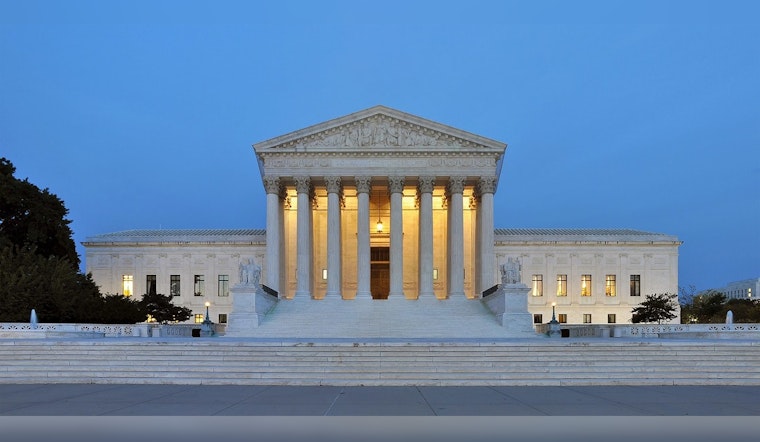
The landscape of presidential power is set to change following a recent U.S. Supreme Court ruling on the scope of presidential immunity. Overturning decades of standards on how former presidents can be held accountable for their actions in office, the court issued a decision that essentially divides presidential actions into two categories: those taken officially, which are immune from prosecution, and the unofficial, to which the law still applies. As reported by FOX10 Phoenix, the ruling arrived amidst ongoing legal battles involving former President Donald Trump and his attempts to challenge the 2020 election results.
Parsing out the implications of the ruling, law professors and constitutional scholars are trying to fully unpack the decision's reach and consequences. Arizona State University law professor Paul Bender highlighted the novelty of the situation, telling FOX10 Phoenix, "It's a new question. It's never been thought of before." Chief Justice John Roberts, representing the court's conservative majority, reasoned that "Under our system of separated powers, the President may not be prosecuted for exercising his core constitutional powers." However, Roberts also noted that "The President enjoys no immunity for his unofficial acts, and not everything the President does is official. The President is not above the law." In this context, legal experts are now to carefully review every presidential action to determine what can justifiably be deemed official.
This development has prompted a stream of reactions from across the political spectrum. While some Republicans have expressed support for the ruling, Democrats and others have voiced concerns about the potential for abuse of power by a sitting president. "What it says is that Presidents have a scope beyond anything that the Framers intended," said lawyer and constitutional historian Robert J. McWhirter in an interview with FOX10 Phoenix. The decision, he added, has shifted the burden of proof to the prosecution to show that an act is criminal and was not part of official duties.
David Super, a Georgetown University law professor, spoke to Al Jazeera, further elucidating the gravity of the ruling, "This fundamentally transforms the presidency," Super said. “Here, the court says the president is still subject to the law, but they’ve made that much, much narrower than it ever was before. These are certainly the kinds of powers that are much more familiar to dictators than they are to presidents of democratic countries.” The decision also detailed that conversations between Trump and Justice Department officials regarding the 2020 election were "absolutely immune" from prosecution, which could imperil the historical independence of the Justice Department.
In a stark dissent, Justice Sonia Sotomayor criticized the majority opinion, saying it made a "mockery of the constitution" and effectively created a "king above the law," according to FOX10 Phoenix. The real-world impact of the decision is yet to be seen, with lower courts now tasked with the challenge of interpreting what constitutes an official versus a private act in Trump's case—and conceivably in future presidents' cases. As the aftershocks of this landmark ruling continue to reverberate, the shape and scale of presidential power in the United States are set for a potentially transformative shift.





