

























































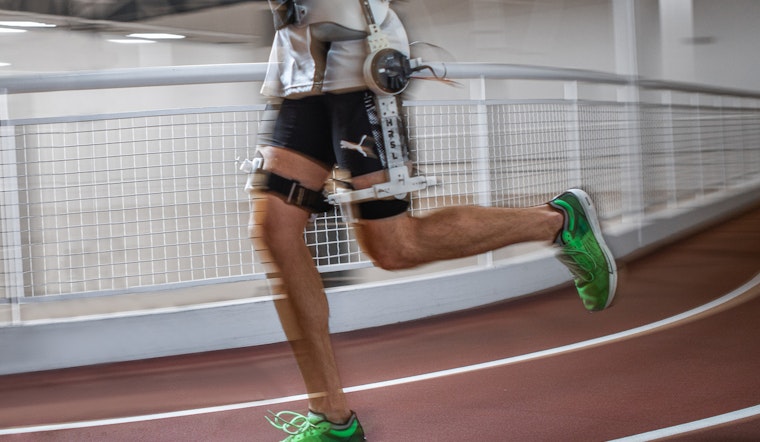
In an effort to push the boundaries of athletic performance, the University of Massachusetts Amherst is teaming up with sportswear giant PUMA to take a leap into the future of running gear with a robotic hip exoskeleton designed to enhance a runner's natural abilities. Leading the charge on this innovative project are UMass Amherst's own Meghan Huber and Wouter Hoogkamer, who bring to the table a rich background in mechanical engineering and running performance studies, respectively.
Huber, the assistant professor of mechanical and industrial engineering, is responsible for the electromechanical design aspect of the exoskeleton. She delves into the intricate balance of engineering and human biomechanics, stating, "Decades of research has shown that simply offering a mechanical advantage with devices like robotic exoskeletons does not guarantee an improvement in human performance," according to a UMass Amherst interview. The team aims not just for speed but for an in-depth understanding of running biomechanics and motor neuroscience, refining designs to work in tandem with the human body.
Combining knowledge from engineering and kinesiology, Hoogkamer, assistant professor of kinesiology and a noted authority in the running community, is leading the performance aspect of the research. Hoogkamer identifies multiple applications for the exoskeleton, including as a training tool or an accessible way for new runners to break into the sport. "People can use it to commute, to train or it can make it easier and more fun to get into running," he shared with UMass Amherst. This sentiment is echoed by Laura Healey from PUMA, who envisions the technology supporting a wide demographic of runners, from novices to speedsters.
The collaborative work of Huber and Hoogkamer has a history of success, with PUMA footwear designed in Hoogkamer's lab being worn by top finishers in the U.S. Olympic marathon trials. Hoogkamer notes, "Actively inputting energy is not allowed in competition," and adds, "But, if we can find a way to recycle energy, that would not necessarily be in conflict with the rules." Huber further explains that the exoskeleton research aims to study its impact at faster running paces than ever before. "Our goal is to study how runners adapt to exoskeleton assistance at much faster speeds. To do this, we are continuously improving our hardware designs to be flexible and comfortable for the runner. Currently, the device is compliant enough to wear while running at a 5-minute mile pace," according to UMass Amherst's announcement.
UMass Amherst's reputation in sports science and running innovation is cemented by the institution's ability to blend pioneering research with practical applications. The development of this robotic hip exoskeleton represents another stride forward for both the university and PUMA as they continue to engineer cutting-edge sports technology for the modern athlete.





