

























































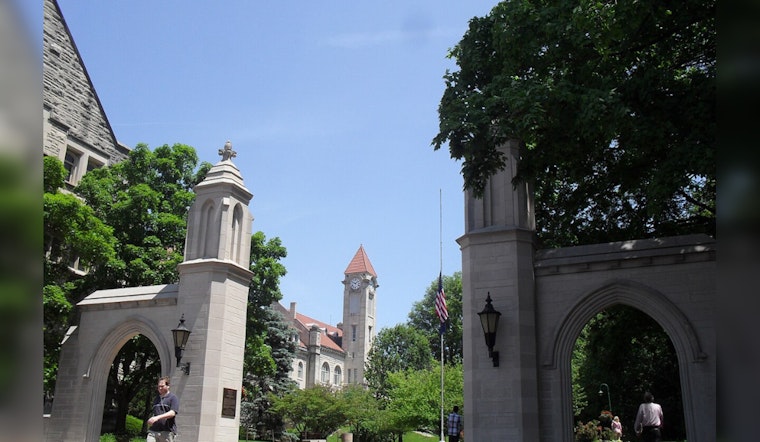
The American Civil Liberties Union of Indiana has raised legal opposition against Indiana University's recent policy on campus protests with a lawsuit. The policy, which went into effect at the beginning of August, limits "expressive activity" across university grounds, including a ban on such actions between the hours of 11 p.m. and 6 a.m. This policy has incited controversy as it significantly constrains the time and manner in which individuals and groups can engage in traditional forms of free expression at the Bloomington campus, according to FOX59.
Specifically, the ACLU sides with an unnamed group that previously held expressive activities at the university. According to the lawsuit filed today in the Indianapolis division of the United States District Court for the Southern District of Indiana, the ACLU claims that the policy is “substantially overbroad” and infringes on the First Amendment rights. "Expressive activity" includes a wide range of actions from displaying signs, wearing message-bearing apparel, to assembling or speaking out on matters of public concern. As detailed by WTHR, the university's policy outlines specific punishments for individuals who fail to comply with the restrictions imposed.
The litigation pivots on the argument that the space in question, Dunn Meadow—a 20-acre area on campus—is a recognized public forum utilized historically for various forms of public discourse. The ACLU puts forward that limiting speech in such a designated area, especially based on an arbitrary time frame, is a direct violation of the First Amendment's guarantee of freedom of expression. This lawsuit arrives amidst nation-wide dialogues concerning speech on college campuses and the balance between maintaining order and upholding democratic principles of free speech and assembly.
In a statement obtained by The Indiana Lawyer, Ken Falk, Legal Director of the ACLU of Indiana, sharply critiqued the policy: “IU has approved a new policy that prohibits all expressive activity if it takes place between 11 p.m. and 6 a.m., even if the activity is not at all disruptive, such as standing silently, holding a sign, wearing a t-shirt with a communicative message, or discussing current events with friends”. Falk stresses that the essence of the First Amendment doesn't adhere to a curfew, but rather it serves as a ceaseless sentinel of democracy. The university has yet to release a formal response to the pending litigation.



