

























































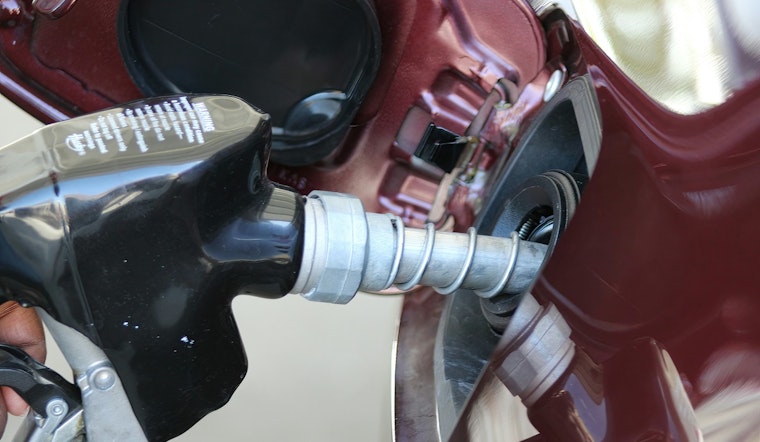
As Labor Day weekend beckons, drivers in metro Atlanta can look forward to more affordable journeys, marking a welcome decrease in gasoline prices. A survey by GasBuddy has cited an 8.2 cents drop per gallon over the past week, bringing Atlanta's average to $3.13—a stumble in price continued from a 43.8 cents lower point than the same time last year. The variance across the city is profound, with the cheapest station offering gas at a steal of $2.71 and the priciest at $3.99, as reported by FOX 5 Atlanta.
Nationally, the trend mirrors Atlanta's descent, with GasBuddy reporting a decrease of 6.2 cents to an average of $3.30 per gallon while the average price of diesel has hit a record low in years falling 3.2 cents to $3.67 per gallon; yet the Labor Day travel forecast—anticipated to be released tomorrow—will reveal the extent of savings for American road-trippers. Not to be left in Atlanta's shadow, neighboring Georgia averages $3.10, Chattanooga a modest $2.75, and Macon at an even $3.00 per gallon, according to FOX 5 Atlanta.
On a broader scale, NPR echoes the descent in fuel costs, as the national average for a gallon of regular receded more than 20 cents since May, positioning to $3.38, remarked as 47 cents lower than last year at this juncture. Experts remain hopeful for the downtrend to propel us towards gas prices we haven't seen since 2021, potentially breaking the $3-a-gallon ceiling.
The fluctuation is not uniform, however, with California's stringent gas tax culminating in a high of $4.59 per gallon, contrasted against Mississippi's easy-on-the-wallet $2.93 per gallon; "For every Mississippi, you have a California to balance it out," Andrew Gross from AAA disclosed, according to NPR. Meteorological phenomena also play their part: Hurricanes can disrupt refinery operations, but the season has remained quieter than the tempest forecasted, and barring any major storms with the transition from a summer to a winter gasoline, this may signal further price relief for consumers.
The weather is not the only factor influencing the market: geopolitical stability, the proliferation of electric vehicles, and even demographic shifts like the increasing median age of the American population are influencers as cited by Gross and Tom Kloza from OPIS, their echoes in the oil arena persist. Moreover, Patrick De Haan of GasBuddy suggests that, barring unforeseen shocks to the current ecosystem, we may see pump prices "crack the $3-a-gallon level before Thanksgiving" and perhaps maintain this low into the following year, offering up a more economical outlook as Americans gear up for the November election in which gas prices, albeit mostly beyond a sitting president's control, may again become a campaign cornerstone, as reported by NPR.





