

























































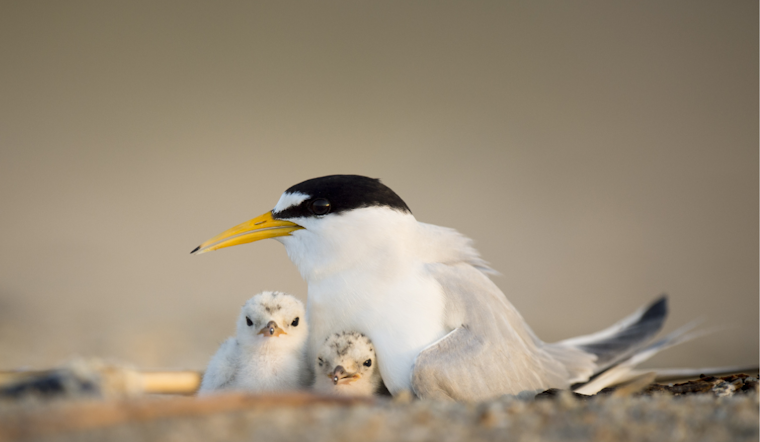
Among the charming sights of Carlsbad's lagoons and coastal beaches, a particularly noteworthy one is the California least tern, officially known as Sternula antillarum browni, a species playing a critical role in maintaining the local ecosystem balance despite its "least" title, which simply refers to its size, being the smallest of the tern species. According to the City of Carlsbad, these endangered seabirds are recognized by their distinctive black caps atop their heads, crisp white foreheads, and sharp, pointed bills, completing their annual pilgrimage to our shores from mid-April to September.
The resonant "kit-kit-kit" of the California least tern, a sound easily accessible via online recordings, often preempts its visual sighting, acting as a natural announcement of its presence. This species, listed as endangered and secured under federal protection since the 1973 Endangered Species Act, relies on Carlsbad's sandy lagoons and beaches for nesting, which are the preferred habitats for these monogamous pairs that not only share a bond but the duty of aggressively guarding their nests against would-be threats.
The presence of the California least tern in Carlsbad signals an environment in robust health, crucial for their survival. The tern dictates the quality of the habitat based on indicators like clean water, abundant food such as small fish and invertebrates, and decent nesting sites; they are also ecosystem contributors themselves, their diet controlling small fish and insect populations, enhancing the overall health of our beaches and lagoons.



