

























































An ambitious stride in Alzheimer's disease treatment might be on the horizon as the National Institute on Aging awards a $6.9 million grant to researchers at the University of California San Diego and the University of Pennsylvania. The team of scientists, under the guidance of Dr. Carlo Ballatore and Dr. Kurt Brunden, aims to shepherd a new compound through the necessary regulatory stages in preparation for clinical trials.
The compound of interest, CNDR-51997, has shown promising results in preclinical studies, restoring brain health in mouse models of Alzheimer's disease, according to a report by UC San Diego News Center. "Alzheimer’s is a devastating disease with very few treatment options, so we are eager to advance CNDR-51997 through the drug development process," Ballatore, a UC San Diego Skaggs School of Pharmacy and Pharmaceutical Sciences professor, told the publication.
The funding will assist in the conduction of formal safety studies required by the FDA prior to the beginning of human testing, the ultimate goal being the submission of an Investigational New Drug (IND) application within a three-year timeframe. CNDR-51997 is particularly noteworthy not only because it targets Alzheimer's disease but also because it is designed to combat tau-mediated neurodegeneration, for which there are currently no approved therapies. Dr. Brunden, a research professor at the Perelman School of Medicine and director of drug discovery at Penn’s Center for Neurodegenerative Disease Research, highlighted the compound's significant potential in a UC San Diego statement, emphasizing the "great unmet need for disease-modifying drugs for the other tauopathies."
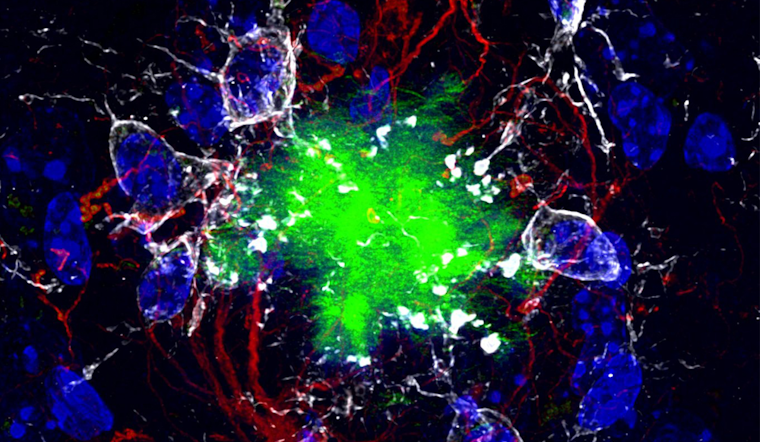
While existing Alzheimer’s treatments like lecanemab and donanemab target amyloid beta deposits in the brain, CNDR-51997's ability to reduce both Aβ plaques and tau pathology positions it as a potentially more comprehensive therapeutic approach. The compound also shows promise in treating diseases beyond Alzheimer's characterized by tau pathology, including several neurodegenerative disorders collectively referred to as tauopathies, Brunden explained in the UC San Diego news release. Researchers contend that the compound’s dual-action targeting provides a glimpse into a future where Alzheimer's and related diseases could be managed more effectively.
The work of Ballatore and Brunden not only underscores the synergistic efforts of two leading research institutions but also highlights the ongoing pursuit to fill the gaps left by current treatments. CNDR-51997's journey from the lab to potential clinical application is a testament to the persistent quest of the scientific community to address the complexities of neurodegenerative diseases and offer hope to countless families affected by these conditions.




