

























































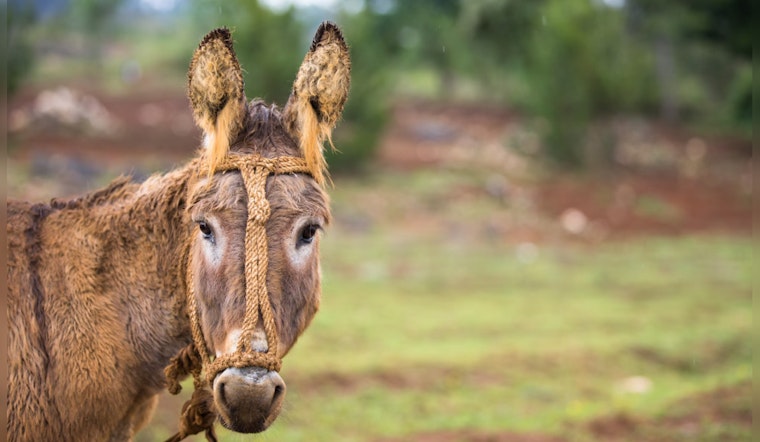
Lake Havasu City officials are sounding the alarm for motorists to stay vigilant on SR 95, where wandering wild burros pose a hazard. The advice comes as a measure to prevent collisions between drivers and the animals, who often venture near or onto the road in search of sustenance or respite from the heat. With the burros being most active at night, the risk is higher during these hours for those traveling through open desert areas adjacent to the highway. Commuters are advised against stopping to feed the burros, as it only encourages them to frequent the roads, potentially endangering both the animals and motorists.
In a recent effort to address public safety and the well-being of the local burro population, the Bureau of Land Management (BLM) initiated a round-up of an estimated 100 wild burros just north of Lake Havasu City. These animals will be relocated to the Florence Wild Horse and Burro Training and Off-range Corral. At this facility, they'll be up for adoption or sale through the BLM's Wild Horse and Burro Adoption and Sales Program, according to the Lake Havasu City website.
Responsible stewardship of the wild burro populations is mandated under the 1971 Wild Free-Roaming Horses and Burros Act. The BLM is concurrently working on a long-term management strategy for the Lake Havasu, Alamo, and Big Sandy Herd Management Areas. This strategy, still under the framework of the National Environmental Policy Act (NEPA) process, might include additional gathers to remove excess wild burros, amongst other management activities planned for the upcoming years.
For more details on the current and future initiatives concerning wild burros in the area, the BLM encourages the public to visit their official website. Full information regarding the gather, adoption, and sales programs, as well as updates on the NEPA process, are available for those interested in further understanding or participating in wild burro management efforts, as reported by the Lake Havasu City.





