

























































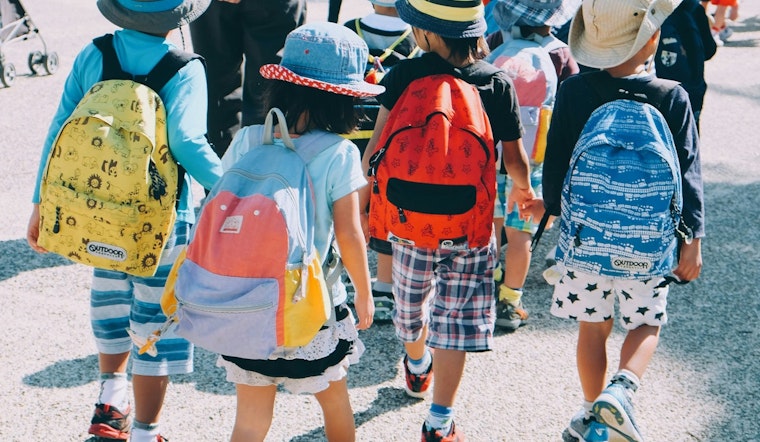
As Texas' youngest scholars tread the post-pandemic education landscape, alarm bells are ringing over their faltering academic strides—a concern highlighted by educators who've observed significant learning gaps in reading and mathematics. According to The Texas Tribune, students entering school amidst or in the aftermath of COVID-19 are falling behind their pre-pandemic peers.
These children show signs of difficulty with separation at drop-off times, and beyond the initial separation anxiety they are now trailing in essential academic skills, Plains Independent School District Superintendent Robert McClain and San Antonio ISD's Superintendent Jaime Aquino note a lack of mathematical fluency among this group, which causes concern as these foundational proficiencies are cornerstones for later learning. Aquino spelled it out bluntly, "When I go into classrooms of students who are currently fourth graders or fifth graders who were either kindergarten or first grade [during the pandemic], you can see that there is a lack of mathematical fluency around basic facts," the Texas Tribune reported.
Research from Curriculum Associates underlines the issue, revealing younger students are markedly behind in both reading and math, CBS Austin reported. Various factors contribute to this quandary, including disrupted early childhood experiences and a transition to virtual learning that may not have served the youngest learners well, alongside a decrease in attendance rates post-pandemic as families readjust to in-person schooling. "We told families to stay home during the pandemic. Now we’re sending the message: You have to be in school," said Aquino, addressing the shift in messaging that may have affected regular attendance.
Adding to this complexity is a significant drop in pre-K enrollment—almost 50,000 fewer children—which directly affects kindergarten preparedness, impeding their academic journey before it even begins, low enrollment during these formative years leads to a precarious domino effect, potentially derailing the educational trajectory of affected children, as indicated by the stark contrast between pre-pandemic enrollment figures and those during the crux of the COVID-19 crisis, Miguel Solis of Commit Partnership, underscored the long-term benefits of the pre-K experience, saying, "Children who attend pre-K are nearly twice as likely to be ready for kindergarten."
Experts argue that the solution lies in swift and sustained intervention, starting with the collection of literacy data in early grades to provide an accurate diagnostic tool for educators. The Texas Legislature is also urged to raise public education spending to ensure districts can afford to hire and maintain quality educators—a move supported by the superintendents of both Plains and San Antonio ISD in their plea for a significant funding boost after previous attempts fell flat in the Legislature.
In Dallas County, the decline in math and reading scores was notably severe among third graders who underwent the pivotal kindergarten year during the health crisis. This suggests a pressing need for legislative action, and some hope emerges as lawmakers have shown an interest in examining the development of foundational skills amongst the young, as reported by The Texas Tribune. As stated by Solis, "We can't wait until the third grade STAAR to see how younger students are progressing."




