

























































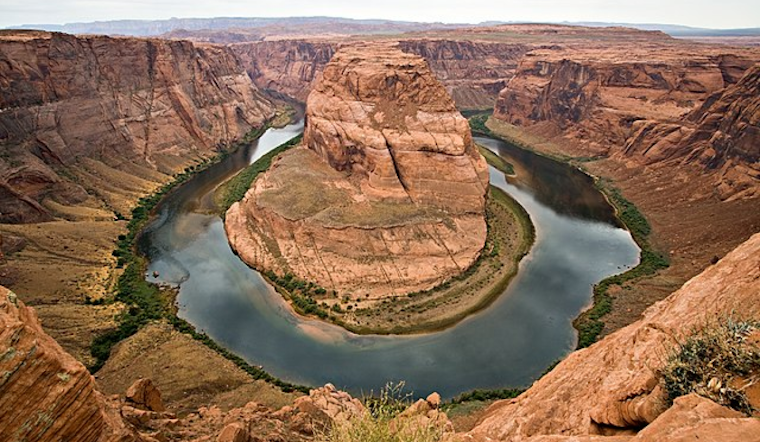
Staring down the reality of drier futures states that converge along the lifeline of the U.S. West, the Colorado River, are bracing for federal water cuts while grappling with the complex task of negotiating long-term water distribution plans. The Colorado River sustains seven Western states, and several Native American tribes, and stretches even to Mexico, but the river's decreasing flow—a consequence of relentless drought and climbing temperatures—has upped the ante on water politics in the West.
According to Suman Naishadham's report for Arizona Public Media, discussions largely pivot on how to apportion the Colorado River’s water post-2026. These negotiations hinge on the 2007 guidelines expiring at the end of 2025. This framework helped to manage the river amid drought, specifying the activation of water cuts based on Lake Mead’s water levels. However, tensions are high, with states trying to come to a consensus on how deeply to immediately cut back use in anticipation of future scarcity.
Imminent water cuts to be divulged for 2025 hinge on current reservoir conditions, where specifically Arizona has shouldered most reductions. Nevada and Mexico also received cuts, but California remains untouched due to its senior rights. In efforts to self-conserve, Arizona, California, and Nevada last year struck a deal to save an additional 3 million acre-feet of water until 2026, an initiative supported financially by the U.S. government.
Climate experts emphasize the need for robust, future-forward planning. Brad Udall, a renowned water and climate scientist at Colorado State University, cautioned in an interview with Arizona Public Media, to not be misled by recent short-term recoveries in the basin’s water levels. He sharply warns, "I would push back heartily against any idea that our rebound over the last couple of years here is some permanent shift."
Disagreement among stakeholders persists as they near the drafting of new water governance for a future that acknowledges a scarcer river. Upper Basin states, for instance, have placed greater emphasis on policy that considers actual water supply over demand. Becky Mitchell, Colorado's lead negotiator, highlighted that "It's important we start acknowledging that there’s not as much water available as folks would like." The federal government is expected to step in by December with draft regulations that consider the numerous proposed plans from the states and other parties. Until such guidelines are issued, stakeholders strive to find common ground on managing the precariously vital waters of the Colorado River.





