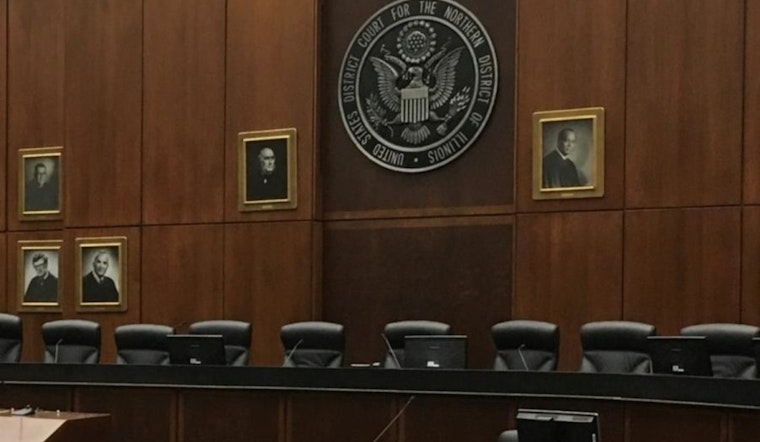
A Rockford man has been sentenced to a decade behind bars for the unlawful possession of a firearm, marking another stride in the ongoing campaign against violent crime in Illinois. Lawndale Pelts, aged 36, was found guilty in May after a jury trial in Rockford’s federal court. On Friday, U.S. District Judge Iain D. Johnston handed down the ten-year sentence, a punitive measure that reflects the gravity of firearm offenses in today's legal landscape.
The case against Pelts unfolded from an incident on July 6, 2021, where home security footage showed Pelts with a firearm amid a shootout in a residential area of 41st Avenue in Rockford. Court documents revealed that Pelts discarded the weapon in a nearby yard and misrepresented the events while being treated at a hospital. A prior conviction prohibited Pelts from firearm possession, a legal boundary he knowingly crossed.
According to the announcement by the Department of Justice, this case and others like it are part of Project Safe Neighborhoods (PSN), a rigorous initiative aimed at reducing violent crime, with a particular focus on gun-related offenses. Federal and local entities are working in unison to enforce these legal parameters, emphasizing accountability for illegal firearm holders.
Acting United States Attorney for the Northern District of Illinois, Morris Pasqual, alongside officials from the Bureau of Alcohol, Tobacco, Firearms & Explosives, including Special Agent-in-Charge Christopher Amon, and Rockford Police Chief Carla Redd, are at the forefront of the PSN program’s implementation in the district. The success of such programs hinges upon the cooperation between various law enforcement agencies, including assistance in Pelts' case from the Beloit, Wisc. Police Department.
The prosecutors, Assistant U.S. Attorneys Jessica Maveus and Cassandra Maier, represented the government in the trial against Pelts. The severity of the sentence underscores their commitment to maintaining stringent enforcement of laws designed to keep communities like Rockford safe from the threat of gun violence. As the continued prosecution of such cases demonstrates, the Justice Department’s prioritization of violent crime reduction remains unwavering in the face of ongoing challenges.