

























































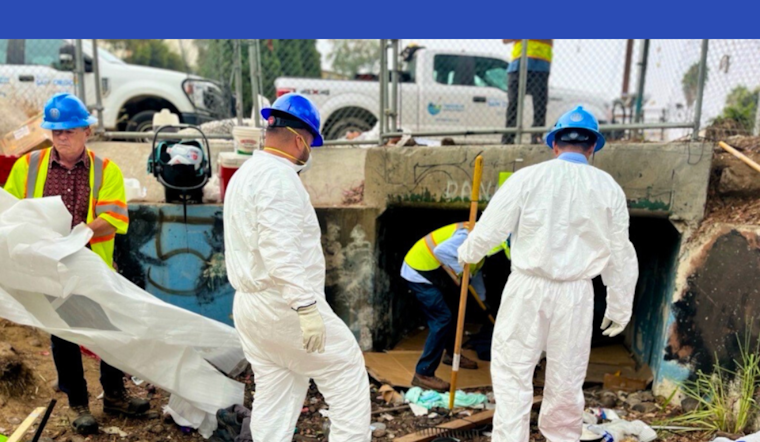
City of San Diego workers cleared a staggering 8,000 pounds of refuse from the Wightman Street Neighborhood Park, cleaning up vestiges of illegal dumping and makeshift structures. The operation was detailed in a report by the City of San Diego, shedding light on a situation that both burdened the aesthetics of City Heights and posed potential hazards to its environmental health.
According to the same report, the cleanup comes after the city received numerous complaints about the Auburn Creek corridor, connected to a stormwater channel behind the park, where debris, including large appliances and mattresses, accumulated. The city logged over 60 encampment reports from the Get It Done app, an initiative for residents to communicate municipal problems. "Illegal dumping is harmful to our environment and takes up valuable City time and resources that could be used on other services for our residents," Mayor Todd Gloria stated to rally more community involvement, as per the City of San Diego.
Planning the cleanup demanded coordination across several city departments and external organizations. On Tuesday, multiple teams from the city's Environmental Services Department (ESD) and Stormwater Department were seen at work alongside Urban Corps of San Diego County and Alpha Project volunteers. Together, they addressed trash and debris within and around the creek.
As reported by the City of San Diego, City Council President Sean Elo-Rivera acknowledged the collective efforts: "Every San Diegan deserves the respect, health and safety that comes with living in a clean neighborhood. For too long, nearby residents weren’t able to enjoy those basics, and an entire community of people worked together to overcome the challenges in this area." Progress depended on the crews and organizations like SAY San Diego, Affirmed Housing, and the City Heights Community Development Corporation (CDC), which remained proactive, offering services to the unsheltered in tandem with the cleanup operation.
Before the cleanup, a 24-hour notice was given as part of the city's abatement procedures. However, the Neighborhood Policing Division's efforts to connect with and offer support services to those in the encampments were, according to the department, largely declined. Post-cleanup, the area will be under regular scrutiny by the Stormwater Department to prevent future accumulation of waste, which runs the risk of clogging essential infrastructure.
As per the City of San Diego, Deputy Director for Environmental Services, Franklin Coopersmith, emphasized the importance of preventive measures, "We are working in close collaboration with the Stormwater Department to ensure that culverts and storm runoff areas are clear and fully prepared for the upcoming storm season." The city is not just reactive; it is walking the talk by organizing community cleanups and through actionable channels for residents to recycle or donate bulky items, highlighted on resources like WasteFreeSD.org.
With illegal dumping imposing a fine of $1,000, city authorities hope residents will lean on the Get It Done app or contact them directly to report such activities to protect community spaces and the environment. The essence of the cleanup is not merely in the removal of trash but in the preservation of a community's right to a healthy space and the embodiment of civic pride.





