

























































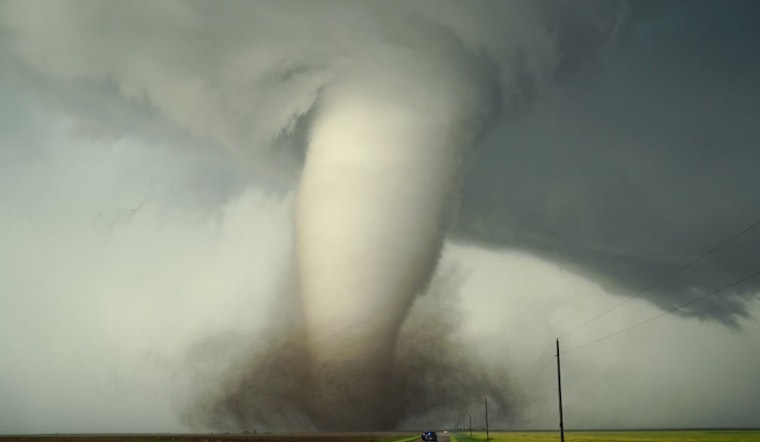
As tornadoes continue to pose a significant threat to lives and property, scientists are tirelessly seeking to unravel the mysteries that lie behind their formation. In a new stride towards this goal, the University of Oklahoma researchers have embarked on a project that leans heavily on the powers of deep learning. The initiative, funded by the National Science Foundation with an $866,172 grant, aims to decipher the life cycle of these devastating phenomena over a three-year period beginning September 1, 2024.
In order to effectively fine-tune their machine-learning models, the OU research team will generate a comprehensive library of approximately 200 numerical simulations. These simulations are designed to closely mirror the atmospheric conditions conducive to tornado genesis. Researchers are determined to adequately train their algorithm to predict tornado development using a broad spectrum of meteorological data—an approach that goes beyond just one or two variables.
Leading the charge is Dr. Nathan Snook, director of research and a senior research scientist with the Center for Analysis and Prediction of Storms (CAPS) at OU, who is convinced of the potential benefits of their methods. "Many different features have been implicated in the literature as being important to tornadoes," Snook asserted in a statement made by OU News, highlighting the importance of temperature, moisture, wind direction, and speed. He believes a machine learning model can take all that information and "look at it impartially, and hopefully confirm or refute existing understanding of how tornadoes form and decay."
Snook and his team are set to employ two distinct approaches in their deep learning endeavor. First, they will input data related to what is currently believed to be critical for tornado formation. Second, they will allow the model to autonomously learn and identify key factors, with scientists interpreting the findings afterward. Snook indicated that the model might uncover new, influential interactions between variables, potentially revealing aspects "human scientists would have a blind spot for," according to OU News.
This research not only boasts a multidisciplinary team from OU, including Dr. Ming Xue, Dr. Amy McGovern, and Dr. Andrew Fagg, but also has NOAA's National Severe Storms Laboratory's Dr. Corey Potvin on board. Together, their insights could drastically alter our understanding of tornadoes and, by extension, enhance prediction models that save lives. As the study commences, eyes from across the meteorological community and beyond will keenly watch the unfolding of this promising intersection of technology and science.





