

























































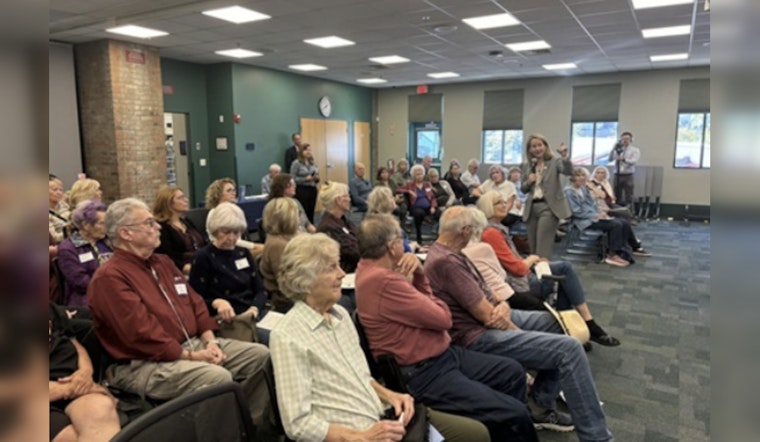
At a Prescott community gathering, Arizona Attorney General Kris Mayes highlighted the urgent need to recognize and prevent scams, especially among the senior population. Mayes, delivering her speech at the very library where her journey into literacy began, reflected the concern of the Yavapai County Sheriff's Office (YCSO) in their countywide mission to shield residents from fraudulent schemes, as reported by YCSO.
Addressing around fifty locals, Mayes shared alarming statistics revealing Arizona as the prime hotspot for scam-related victimizations of the elderly last year, with her office receiving a staggering 17,000 complaints annually, this detail mirroring the YCSO's vigilance in protecting the vulnerable—a concern growing increasingly palpable as predictions suggest that seniors will surpass the number of youths under eighteen within a decade. She encouraged kin and close companions to routinely check on the elders in their lives for signs like mood shifts or altered spending habits that could indicate scam involvement, according to YCSO.
The AG emphasized the importance of staying informed about constantly evolving scamming tactics, such as romance scams and impersonating relatives in distress. She urged her audience to protect personal and financial information from persuasive strangers, noting that the elderly are often vulnerable to making hasty decisions without proper verification. Mayes recommended creating strong passwords, regularly checking bank accounts, and discussing any questionable offers with trusted individuals before taking action. These conversations can be crucial, especially in light of the rise in romance scams, where fraudulent individuals on dating sites and social media seek to exploit those seeking companionship, according to YCSO.
Further illustrating the deceptive tactics used by scammers, Mayes highlighted online romance scams, where love bombing can lead victims to financial ruin through wire transfers and cryptocurrency. A common scheme involves a fake emergency from a supposedly distressed young relative, with scammers using artificial intelligence to mimic voices and create fabricated crises that demand immediate financial assistance, hoping the senior will act quickly out of concern for family. "Hang up and call the relative yourself to verify they are ok," Mayes advised, suggesting that families establish a secret emergency word or phrase as an extra layer of security, as one attorney in her office had personally come face-to-face with such deceit, as per YCSO.
Other types of scams identified by the AG include phishing emails that prompt urgent action through deceptive links, investment scams that make unrealistic promises, and fake charity schemes that exploit compassion for disaster victims or noble causes. The Arizona Attorney General's Office, the Federal Trade Commission, and the YCSO Fraud Investigations Unit serve as gatekeepers against financial predators, urging anyone approached by potential scammers to seek their assistance for verification or to report suspicious activity. Information about company legitimacy can be checked through the Better Business Bureau.





