

























































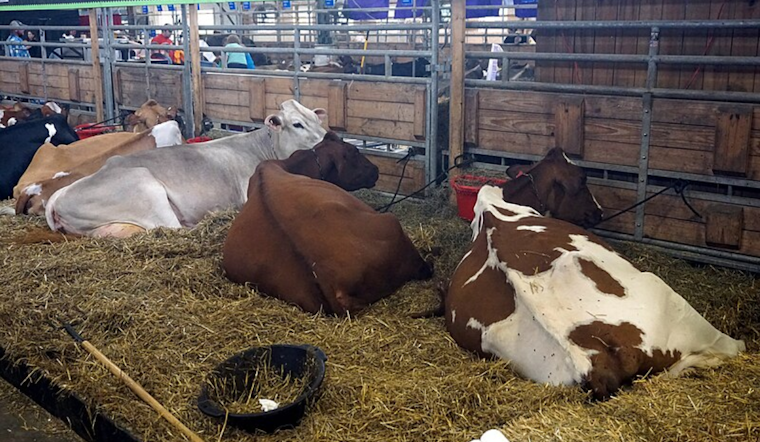
Cache County, known for its lush dairy farms, is currently facing a quandary as eight of its commercial dairy facilities have been put under quarantine due to confirmed cases of Highly Pathogenic Avian Influenza (HPAI) in cattle, as reported by ABC4. This action was taken after the Utah Department of Agriculture and Food (UDAF) imposed mandatory surveillance on all the county's dairies on Oct. 23, and initial samples were sent to the Utah Veterinary Diagnostic Laboratory in Logan for testing.
Following the detection of HPAI, restrictions were placed on the movement of lactating cattle, they cannot be transported off or onto the premises, except for those being sent directly to slaughter, according to the UDAF. According to FOX13, the quarantine also necessitates additional biosecurity measures to curb the potential spread of the disease.
In soothing public concern regarding the food supply chain and individual dairies, State Veterinarian Dr. Daniel Christensen assured, as obtained by FOX13, that “At this time we don’t anticipate any major impacts on the food supply and the overall impacts to individual dairies are relatively minimal." He also pointed out that this strain of the disease impacts birds more severely than it does cattle, and the U.S. Food and Drug Administration similarly reminded the public that the disease poses a greater threat to birds rather than humans.
Farmers are being advised to stay vigilant for symptoms of the disease, as HPAI can have varying effects depending on the species. For dairy cattle, symptoms could include decreased milk production or thicker milk, signs of dehydration, and fever, but most dairy cattle tend to recover within a few weeks, as KSL reported based on information from Hargraves of the UDAF. Poultry, on the other hand, might exhibit more severe symptoms such as high death rates, nasal discharge, and lack of coordination, and it's important to note that not all dairy cattle will necessarily show symptoms, which adds a layer of complexity to detecting the disease in bovine populations.





.jpg)