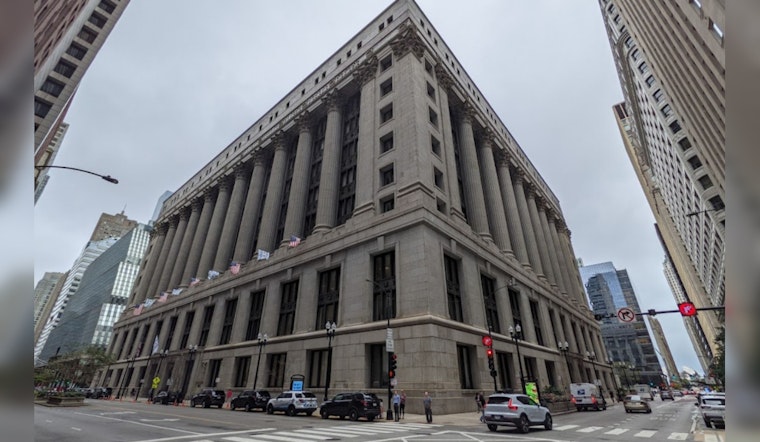
In a bold move to tackle a looming budget deficit while simultaneously boosting community investments, Mayor Brandon Johnson unveiled the Fiscal Year 2025 budget for the City of Chicago. This financial blueprint, designed to balance the books without sacrificing critical services, prioritizes affordable housing, mental health support, public safety, and youth employment opportunities. In a statement obtained by Chicago.gov, Mayor Johnson emphasized that the budget "reflects the commitment to invest in our people and neighborhoods, ensuring that every Chicagoan has the opportunity to thrive."
Chicago faces a daunting $986 million budget shortfall, but the Johnson administration is determined to not fall back on mass layoffs or wholesale austerity to bridge the gap. The budget promises to strategically address the city's needs while upholding fiscal accountability. It's set to invest $52 million in youth jobs, aiming to both empower 30,000 young Chicagoans and to significantly expand internship opportunities within the municipal setting. Furthermore, the One System Initiative (OSI) is a $40 million project ready to double the capacity of shelters, according to Chicago.gov.
The 2025 budget also continues to bankroll community violence prevention programs with an investment surpassing $100 million. This includes a new mental health dispatch unit besides $2 million earmarked for strengthening the city's mental health network. In a city striving for fiscal stability, Chief Financial Officer Jill Jaworski underscored the importance of addressing obligations "head-on and implementing prudent financial policies" to safeguard Chicago's financial future. This includes a planned advanced pension payment, ensuring obligations to city employees are conscientiously met.
To mitigate the budget deficit without resorting to drastic workforce reductions, the city has pinpointed nearly $300 million in savings from strategic cuts and efficiencies. This includes axing under 700 vacant positions through what Budget Director Annette Guzman described as meticulous planning and tough decision-making. She explained that the focus was to "find efficiencies without compromising essential services." Moreover, Chicago is also eyeing to increase property tax revenues based on revised estimates, efficient adjustments to taxes and licensing, strategic use of one-time fund reserves, and better debt collection practices.
Record surplusing of Tax Increment Financing (TIF) funds is another strategic move in the 2025 budget, totaling $570 million contributed to various city needs, with over $300 million allocated to Chicago Public Schools. The city comptroller, Chasse Rehwinkel, highlighted another aspect of the budget aimed at making revenue streams more equitable, notably through the expansion of debt relief programs. "We have taken significant steps to make our revenue streams more equitable," Rehwinkel told Chicago.gov.
The implications of not adopting this balanced approach were stark. Without it, the city would face an additional reduction of 4,000 positions, a blunt force that would see cuts across vital departments such as the police and fire services, sanitation, and facilities maintenance — directly impacting the city's safety and operations. Mayor Johnson stressed the budget wasn't merely balanced but also visionary, aimed at engraving a path toward a brighter Chicago—a city for all to succeed.