

























































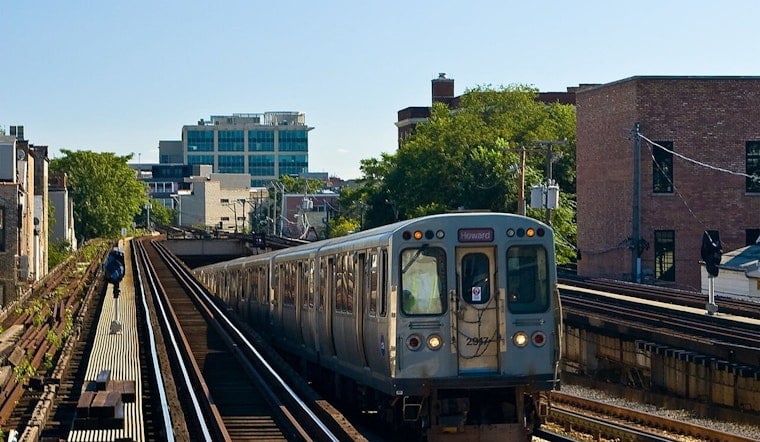
The Chicago Transit Authority (CTA) has put forth a $2.1 billion budget proposal for 2025, which aims to sustain current fare prices while moving towards enhancing service levels above what was seen before the pandemic hit. The proposed budget, which is available for public scrutiny on November 7, represents an 8.1% increase from the preceding year, as reported by the Chicago Sun-Times. The CTA believes this move is necessary to support its objectives in improving service and heightening the hiring of transit operators.
In spite of the positivity surrounding the service enhancements, a formidable financial challenge looms in 2026 when the pool of federal COVID-19 relief funds runs dry, with transit agencies across the region anticipating a combined $730 million deficit. The CTA has highlighted the outdated state funding formula as a key contributor to this impending issue, terming it as "inadequate." "This deficit is a direct result of an inadequate state funding formula, passed in 1983, that has been further exacerbated by the ridership and revenue declines caused by the COVID-19 pandemic," the CTA expressed in a news release. Meanwhile, state lawmakers are also deliberating over a bill that could consolidate various transit agencies into a single Metropolitan Mobility Authority, though this has met with some resistance from transit leaders who prefer revising the existing funding model, according to the Sun-Times.
A deeper look into the budget details, shared by the Chicago Tribune, reveals that no fare increases are scheduled for 2025. However, the CTA plans to pad the budget with $578.5 million in federal aid, but this still leaves a shortfall of about $66 million for 2026. The CTA is advocating to the state for additional funding to help seal the budget gaps projected in the future years, with figures nearing $539 million for 2026 and $642.3 million for 2027.
On the operational side, the CTA is focusing on boosting service capacities. "We need a central agency that is going to address safety, reliability, and accessibility for the entire region. And that is what is lacking right now," State Sen. Villivalam told Chicago Tonight. The Tribune reports that the CTA anticipates an overall 5.8% increase in service when compared to 2019 figures. This aligns with previous efforts to attract more riders, like their recently approved pilot program to test digital displays at bus stops, presenting real-time bus information meant to enhance the customer experience.
Security still stands as a critical talking point for the CTA, with plans to maintain the number of unarmed guards and K-9 teams patrolling daily in 2025, estimated at $88.5 million, comparable to this year's costs. Despite this, CTA board members are pushing for a multifaceted approach to improve safety and encourage ridership recovery. “If our riders don’t feel safe, our customers don’t feel safe, and many of our staff members have indicated that there’s safety concerns that they have, then we’re not going to get our ridership back up,” CTA board Chairman Lester Barclay emphasized in a discussion regarding the effectiveness of the current security measures, as mentioned in the Tribune article.
Furthermore, major capital projects are on the horizon, with the CTA allotting $6.96 billion over five years for various initiatives, including the Red Line Extension anticipated to break ground in late 2025. This project recently saw a budget increase to $4.8 billion before financing, prompting the agency to find additional funds and possibly resort to more bond financing. Amidst these financial concerns and projects, the CTA remains committed to improving accessibility and plans to open new and rehabilitated stations throughout 2025 as part of its ongoing modernization efforts.





