

























































The Healey-Driscoll Administration has allocated over $2.4 million for ecological restoration projects across Massachusetts, a move that's aimed at enhancing local communities' resilience against climate change and improving the state's waterways and habitats, according to an announcement from the Massachusetts Department of Fish and Game's (DFG) Division of Ecological Restoration (DER). These projects are funded through DER and will support not only the environment but also public safety and infrastructure.
EEA Secretary Rebecca Tepper expressed the Administration's commitment to building a climate-ready future, noting that "these awards will support municipalities and partners in restoring healthy waterways and enhancing resilience against increased precipitation and extreme weather," as quoted by Mass.gov. In similar sentiments, DFG Commissioner Tom O'Shea highlighted ecological restoration as a key strategy to address the dual crisis of biodiversity loss and climate change emphasizing the partnership with communities to upgrade culverts, thus benefitting both people and the environment.
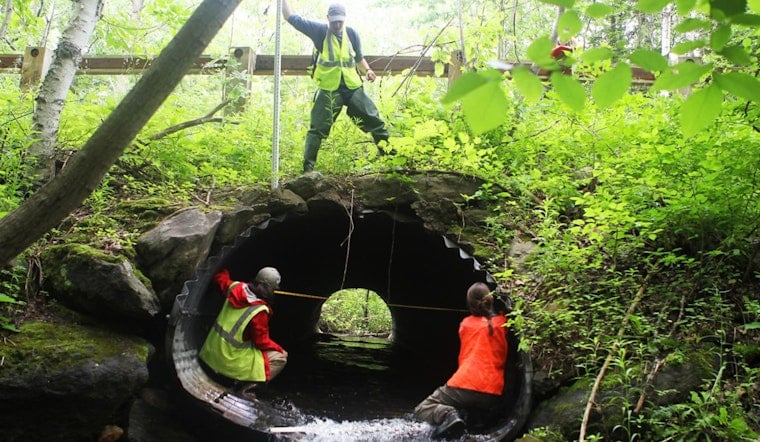
Over $2 million is being directed towards 17 towns through the Culvert Replacement Municipal Assistance (CRMA) Grant Program and the Culvert Replacement Training Site Initiative, with the aim of replacing outdated and problematic culverts, leading to improved wildlife movement, reduction in flood risks, and public safety enhancements. Yet, it's not just about funds, DER's initiative also extends to building a network of professionals adept in culvert replacement aligning with Massachusetts Stream Crossing Standards. This includes providing training, site visits, and technical assistance to strengthen the skills of road managers, which further underscores the Administration's broad approach to fostering ecological integrity.
The Priority Projects Program of DER, meanwhile, is funneling $344,000 into two restoration projects expected to deliver significant ecological, social, and economic benefits. Significant projects under this program involve the removal of unsafe dams and the revitalization of freshwater wetlands among other initiatives. One notable project, the Herring River Estuary Restoration Project on Cape Cod, has gained attention for its large-scale environmental impacts, and as State Senator Julian Cyr stated, it's set to be “one of the Northeast’s most impactful environmental efforts,” an affirmation of the collective effort spanning local, state, and federal partnership aimed at the estuarine habitats and aquaculture industry, according to Mass.gov.
Communities like Dudley and Monson are among the grant recipients for their local culvert restoration efforts, a development welcomed by State Senator Ryan Fattman for its importance in ecological protection work. Additionally, State Representative James Arena-DeRosa lauded the Administration for bringing much-needed infrastructure investments to address flood-prone roadways while enhancing wildlife habitats, citing Hopkinton's culvert replacements on Fruit Street as a specific example.





