

























































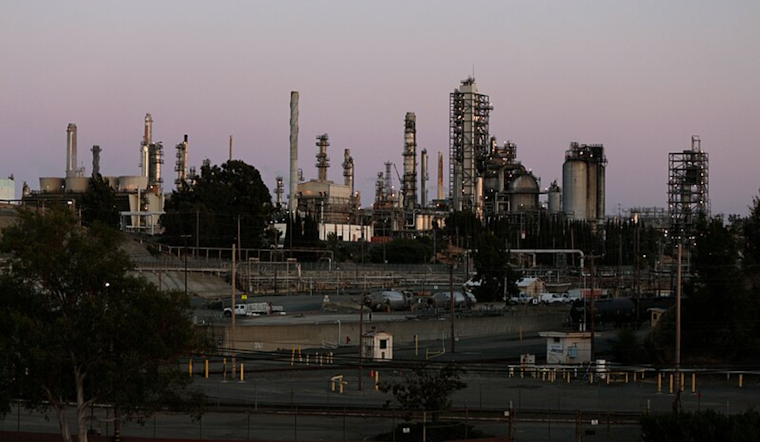
According to an announcement today, the Bay Area Air Quality Management District has fined the Marathon Martinez Refinery a hefty $5 million for air quality infractions. The refinery, a subsidiary operation under Tesoro Refining & Marketing Company LLC, received the second-largest penalty ever imposed by the Air District, resolving 59 Notices of Violation from 2018 to 2022. This fine is a statement of intent about the Air District's stance on environmental compliance and community health.
During the period mentioned, the Marathon refinery was found to have engaged in several violations, including improper flaring of vapors from storage tanks and loading racks, which should have been burnt in its production processes. Especially as the plant reduced operations in response to the COVID-19 pandemic, its mismanagement of gases related to the shutdown, idling, and decommissioning of refinery units was found negligent. According to the Bay Area Air Quality Management District, the actions signaled a disregard for air quality regulations meant to protect public health.
The fine encompasses more than the flaring incidents. It also accounts for other infractions, such as venting gases through a flare that was out of action for maintenance and instances of visible emissions from smoky flares. Aside from air pollutants like sulfur dioxide and hydrogen sulfide, Marathon was penalized for excessive visible particulate emissions and delays in conducting necessary repairs to curtail these emissions. The Air District confirmed that the refinery has fully rectified all the violations included in the penalty.
Davina Hurt, the chair of the Bay Area Air Quality Management District’s Board of Directors, emphasized the value of community health, stating, "The health of our communities should be non-negotiable." She highlighted the penalty as evidence of the Board's "unwavering commitment to hold polluters accountable and safeguard the health of our communities." Further asserting the need for industry accountability, Hurt said, "We must prioritize people over profits." Most penalty funds are earmarked for community reinvestment, aimed at funding projects that improve air quality and offer long-standing benefits to those most affected by the toxic emissions.



