

























































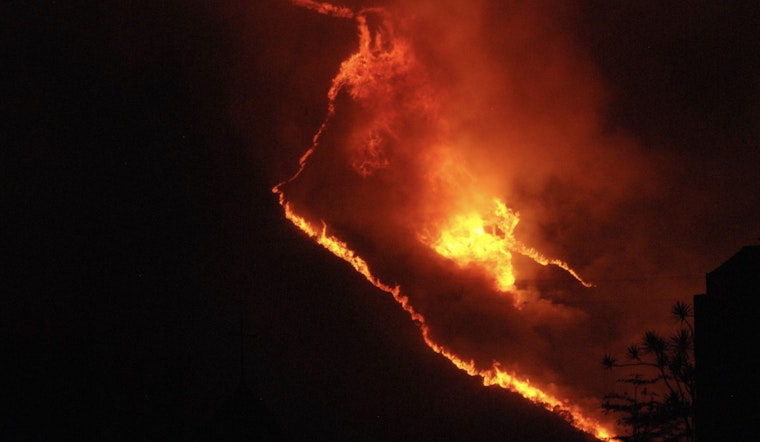
Massachusetts is dealing with brush fires, as helicopters drop water on the flames. CBS Boston reports that smoke has been visible for miles, especially affecting Middleton. Local residents say the dry conditions have made the fires more intense, making firefighters' efforts crucial and difficult.
The situation in Middleton worsened with a 50-acre brush fire near Upton Hills Road, fueled by dry weather and debris on the ground. This fire was one of over 18 reported across Massachusetts in the past day. According to Boston 25 News, the fires have burned more than 250 acres of land in Middleton.
Amid these crises, the Massachusetts National Guard and local fire departments showed strong dedication to controlling the fire. "The National Guard started doing some air drops to help hit the hotspots and knock down the flames," Middleton Fire Chief Douglas LeColst told Boston 25 News. This aerial intervention was just one part of a comprehensive strategy to address a persistent natural threat.
State Fire Marshal Jon M. Davine has urged residents to exercise caution amidst sunny and brisk weather, which, while ideal for outdoor activities, also represents prime circumstances for fires to breed and surge out of control. "The dry, sunny, breezy weather is great for recreation, but it also means that any outdoor fire will spread quickly and become very difficult to manage," Davine cautioned in a statement obtained by CBS Boston. Experts have emphasized that many of the fires plaguing the state are man-made, often ignited by ill-advised campfires or accidental sparks.
Residents with respiratory conditions or cardiovascular disease face additional hazards, with smoke potentially aggravating their symptoms. "The people that have underlying conditions that affect their heart and lungs will probably be the most at risk," Dr. Wynne Armand of Massachusetts General Hospital explained to Boston 25 News.







.jpg)