

























































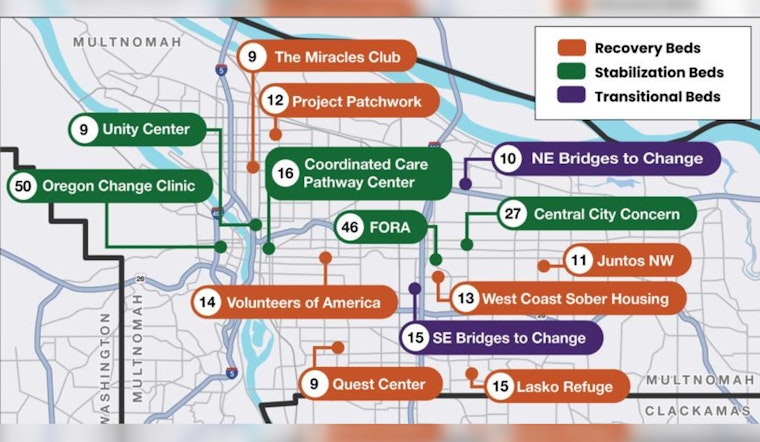
The landscape of behavioral health services in Multnomah County has reached a significant milestone with the addition of over 250 new recovery and stabilization beds, thanks to the Board of County Commissioners' investments over the past year. The goal of bolstering long-term support for individuals grappling with substance use and mental health crises is materializing, evidenced by these beds now serving those in need, according to the Multnomah County.
Addressing the decades-long shortfall in the continuum of care—from sobering and stabilization centers to transitional housing—is essential, expressed Chair Jessica Vega Pederson. "These investments are doing exactly what we set out to do – set up significant future infrastructure in our continuum of care," Vega Pederson stated, noting the crucial role of such infrastructure in the momentum to mend service gaps. Behavioral Health Division Director Heather Mirasol highlighted the shift towards better service accessibility and the profound impact these investments have on the region's residents. Mirasol extended gratitude to the community-based organizations working hand-in-hand to provide these services, according to Multnomah County's report.
Investments made last September, sourced from over $14.4 million in unexpected Supportive Housing Services (SHS) revenue, have been funneling into various projects. Commissioner Jesse Beason underscored the urgency voiced by voters for more robust support in the behavioral system. Beason pointed to the positive outcomes of these funds in altering the lives of community members seeking recovery paths. Additionally, $150,000 of the SHS revenue aided in the design and planning of a sobering center, led by Commissioner Julia Brim-Edwards, who has subsequently laid out a first responder drop-off sobering center plan earlier this year, as per the Multnomah County.
With an eye on culturally-tailored care, nearly half the new beds are specialized for culturally-specific recovery services. "We all know that Oregon ranks among the lowest when it comes to access to behavioral health services,” Commissioner Lori Stegmann remarked, as mentioned by the Multnomah County. However, Stegmann sees a changing narrative as strategic investments are making strides in plugging the access gap for culturally specific resources. The efforts by public officials signal an acknowledgment of a systemic issue that has long demanded redress, with an apparent focus on inclusive recovery methods.
Community providers like The Miracles Club and Bridges to Change have reacted positively to the county's support. Executive Director Julia Mines of The Miracles Club stressed the importance of housing in stabilizing and rebuilding the lives of African-Americans in recovery, while Deputy Director Hannah Studer of Bridges to Change highlighted the significance of the housing programs in supporting community stabilization and integrated care access. Fora Health's CEO Devarshi Bajpai recognized the value of the county's partnership, which he said will significantly aid those battling homelessness and substance use disorders. Quest Center for Integrated Health's Director of Programming, Danielle Deer, pointed out that their ability to provide housing alongside treatment markedly boosts the odds of participants achieving long-term recovery, with community at the center of healing, as stated by the Multnomah County.
These corrective measures by Multnomah County, ranging from sobering centers to recovery-oriented housing, represent a holistic approach to behavioral health, placing a keen eye on sustainability, culturally-specific needs, and strengthening the available support pathways for those engulfed by the challenges of substance use and mental health disorders.




