

























































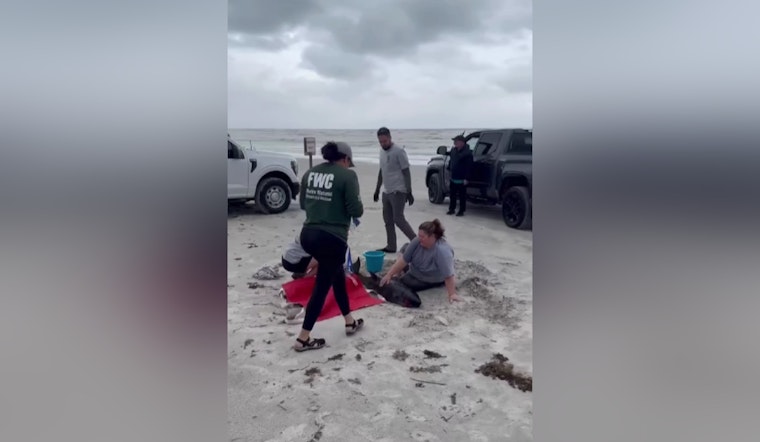
A tragic incident left beachgoers and environmental conservationists disheartened after a dwarf sperm whale calf, found stranded on Butler Beach in St. Johns County, was revealed to have ingested a large plastic shopping bag. Last month's event was not isolated to just a creature sadly out of its element but unfolded to tell a grimmer tale of oceanic pollution impacting marine life.
In the case of the juvenile cetacean, officials were compelled to humanely euthanize the whale due to its emaciated state and subsequent examination unveiled the cause of its suffering. "During the necropsy, a large plastic bag was found in the emaciated calf’s stomach, which obstructed digestion," First Coast News reported, relaying information from Nadia Lentz, a marine mammal assistant research scientist with the Florida Fish and Wildlife Conservation Commission. The plastic caused "multiple ulcerations, a false sense of satiation, and progressive debilitation" which was suspected to lead to the calf's stranding.
This avoidable incident rippled through the community, prompting calls to action. Conservation group Oceana has been advocating for a clampdown on plastic production. According to an interview with Oceana’s Hunter Miller by Jax Today, local and federal officials bear a significant responsibility in curtailing the amount of plastic produced. Miller asserted that recycling is not an "adequate solution to the plastic pollution crisis," as mentioned on First Coast News.
Following the somber discovery, local authorities have reiterated guidance on addressing beached marine animals. The St. Johns County Beach Services, via an Instagram post covered by News4Jax, advised against attempting to push stranded marine mammals back into the water. They noted that such actions could delay necessary care and treatment. Instead, the public is urged to call the FWC Wildlife Alert Hotline and await directions on how to properly assist these vulnerable creatures.





