

























































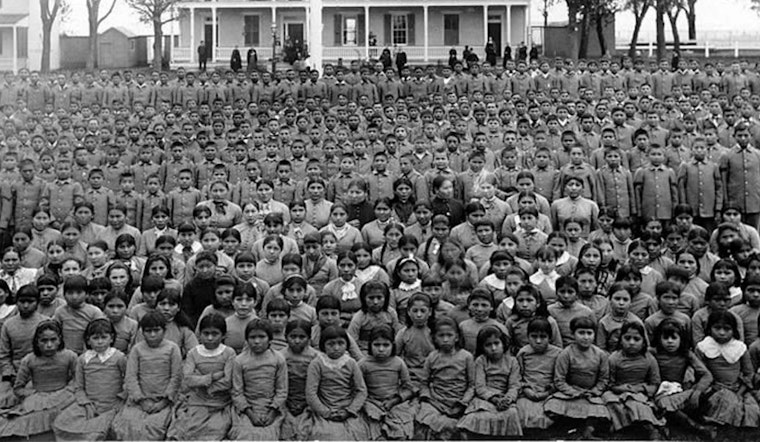
In a move that resonates through history and the complex tapestry of American relations with its indigenous peoples, President Joe Biden recently issued a formal apology for the long-standing trauma inflicted upon Native American communities through the Indian boarding school system. This institutional attempt to forcibly assimilate Native American youth into mainstream society has left deep scars that persist across generations.
The acknowledgment comes amid renewed discussions on the impacts of such schools, where children were stripped of their languages, cultures, and religions in a misguided effort to "civilize" them—an effort that according to ABC15, included the Phoenix Indian Industrial School established in 1891. Patty Talahongva, a Hopi journalist, noted, "You can't speak your language. You can't wear your traditional clothing,” reflecting on policies that endeavored to eradicate Indigenous cultures.
This historic apology has sparked reactions among survivors and descendants of those affected by these schools. Gabriel Yellow Hawk, a member of the Pipestone Human Rights Commission, emphasized the dichotomy Native Americans once faced: assimilation or annihilation. "You could either exterminate every single Indian person, or you could assimilate them and make them civilized," Yellow Hawk relayed to KFYR-TV. The trauma from these institutions, as per accounts of the abuse survivors and their descendants, includes rampant physical and emotional abuse, contributing to long-lasting generational issues.
While the apology has been largely seen as a positive step, many underscore that more needs to be done. The effects of these schools have to become embedded in deep-seated health disparities, educational disadvantages, and socio-economic challenges within Native communities. "What needs to happen is for Congress to fully uphold its trust responsibility to Indian Country," Talahongva told ABC15. This would entail honoring treaties and providing the necessary support in terms of housing, health care, and education for American Indians.
The dialogue on this issue continues to unfold, with various entities and Native American leaders advocating for the importance of recognizing and learning from this aspect of American history. Mike Tyrell, president of St. Joseph’s Indian School, offered his perspective in support of Biden's message, hoping that "an honest apology and truth-telling can open the pathway to healing," as reported by KFYR-TV. The president's apology has, at the very least, provided a form of validation for the survivors and their families, acknowledging their suffering as an integral part of the nation's collective consciousness and responsibility.




