

























































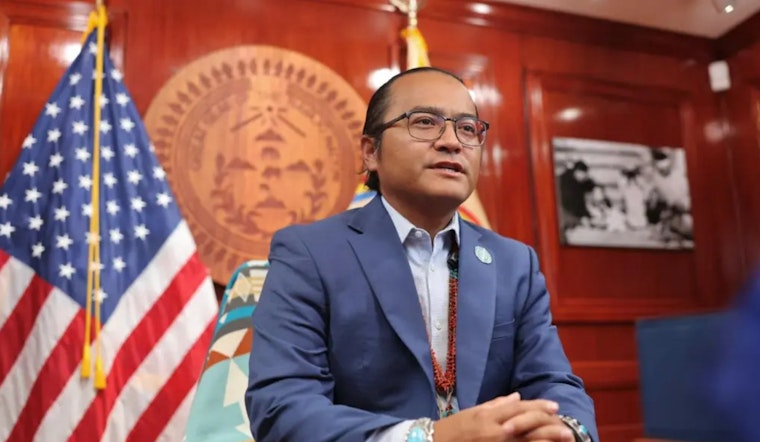
While President Buu Nygren was busy advocating for the Navajo Nation's future at the White House, he also managed to multitask by submitting a written quarterly State of the Nation report to the Navajo Nation Council. The subject at hand was the appointment of a commission for the Office of Navajo Hopi Indian Relocation (ONHIR). In a move to represent his people and to ensure that their voices were heard, Nygren attended this crucial meeting alongside the Navajo Hopi Land Commission Chairman Otto Tso and Vice Chairman Casey Allen Johnson.
The meeting marked a significant occasion—it was the first time in over two decades that the Navajo Nation was invited to actively participate in the selection process for a new ONHIR commissioner. Since 1994, a vacancy in this role was apparent, and it seemed the efforts to fill it were all but forgotten. In his report, Nygren addressed the dire need for this position to be filled, asserting to quickly and efficiently establish a commissioner to lead ONHIR forward. According to a statement obtained by the Office of the President and Vice President of the Navajo Nation, Nygren expressed, "The time has come, and is long past, for a commissioner to be appointed."
A poignant aspect of Nygren's report was his tribute to Navajo Code Talker John Kinsel, Sr., who passed away at the age of 107. In honor of his service and to remember his contributions, President Nygren ordered that the flags across the Navajo Nation be lowered to half-staff. "Like our other Code Talkers, he will not be forgotten. We shall forever be in his debt for his bravery and protection of the United States and the Navajo Nation he loved," Nygren was quoted in the same statement.
Looking ahead to an approaching historical milestone, President Nygren also highlighted the upcoming 50th anniversary of the 1974 Navajo and Hopi Indian Land Settlement Act. With the 50-year mark nearing, the President proposed that the Council should seriously to consider legislating $50 million in reparations to aid the relocatees who've suffered throughout this time. These funds, as Nygren stressed, would provide services previously denied by legal constraints. He rallied the Council, stating, "I support a request of $50 million to assist them," further advocating for the wellbeing of those deeply affected by the act.
The President's actions signify a continued push for reform and recognition of the injustices faced by the Navajo people. As the relocation act turns 50, it becomes a reminder of the challenges faced by the Navajo Nation, and President Nygren's report becomes a document of remembrance, hope, and a roadmap to addressing longstanding issues. It's a pivotal time for the Navajo Nation as they seek to navigate through complex political landscapes to secure a more equitable future.





