

























































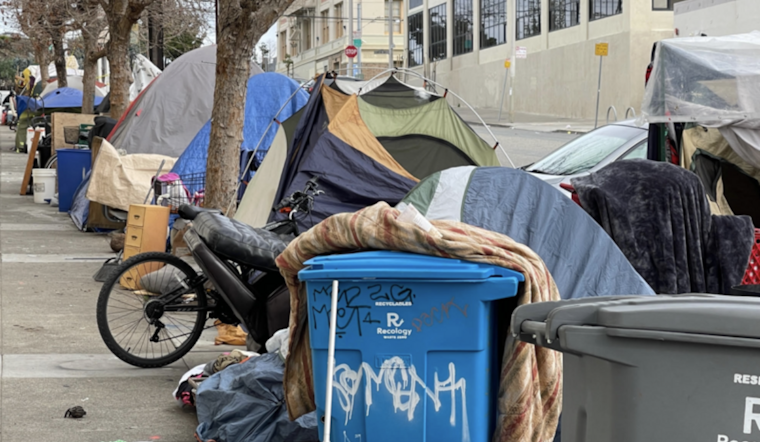
San Francisco's struggle with homelessness has seen a notable decrease in the visibility of its crisis, thanks to consistent efforts from city services. According to a recent announcement from Mayor London Breed's office, the latest quarterly tent count reveals a 60% reduction in tents and makeshift structures since July 2023. Last Wednesday, the count found 242 tents and structures, the lowest number recorded since before 2018.
Efforts led by the Healthy Streets Operations Center (HSOC), a multi-agency team, have been critical to this downward trend. Bringing people indoors, the HSOC has connected over 950 people from encampments to shelters since the beginning of 2024. Due to the dedication of the City workers, every supervisor district reflected reductions, with only five reported encampments of five or more tents/structures, as opposed to 14 in July 2023, found across the city, as per the City and County of San Francisco.
Moreover, fewer people have been making their homes in vehicles, which had risen to over 1,000 the previous summer. Targeted efforts have seen the vehicular count reduce to 458 in October. Direct outreach on Winston Avenue and Zoo Road assisted 50 households in transitioning from vehicles to long-term housing. In contrast, continued outreach to RV dwellers has been a focus across San Francisco. A total of 365 shelter offers were accepted during these engagements, as reported by the City and County of San Francisco.
However, these positive developments occur amidst ongoing controversy and intense debate over the city's approach to addressing homelessness. Earlier this year, advocates called for the use of over 700 vacant homes to house unhoused residents, criticizing Mayor Breed's administration for ramping up encampment sweeps without providing sufficient permanent housing solutions. According to a Hoodline San Francisco report, community leaders have been vocal in their assessment that the city's strategies are falling short in meeting the needs of its most vulnerable citizens, some even calling to house homeless people in vacant, privately owned properties.
Mayor Breed's "Journey Home Executive Directive," which includes aggressive sweeps and potential criminal penalties for maintaining encampments, has been a focal point of contention, especially in an election year where the administration's handling of homelessness is under heightened scrutiny. Legal challenges following the Supreme Court's decision, which effectively allows cities to clear encampments without facing immediate legal rebuke, have empowered San Francisco to act more assertively. This shift in legal landscape is detailed in Hoodline's coverage of the very aggressive encampment sweeps, where the city has intensified efforts to dismantle encampments under the new legal allowances.
Specific instances of controversy include police interactions during encampment sweeps. For example, during a sweep in the Tenderloin district, an SFPD officer was recorded by the SF Standard telling a homeless individual that Mayor Breed and Governor Newsom have decreed, "No more encampments." This aggressive enforcement approach has been criticized by both legal experts and advocacy groups. John Do, senior attorney for the ACLU of Northern California, emphasized that "the fight's not over" regarding civil rights protections, highlighting ongoing resistance against the city's methods.
Despite the reductions reported by the City and County of San Francisco, organizations like the Coalition on Homelessness continue to defend the rights and dignity of the unhoused population. They argue that the city's focus on clearing encampments without adequately addressing the availability and condition of permanent housing units exacerbates the crisis. According to another Hoodline article, there are currently 793 permanent supportive housing units open, with 398 offline due to needed repairs and another 229 in the process of being occupied, leaving only 166 units ostensibly available. Advocates stress that many of these units require refurbishment, representing a tangible yet underutilized immediate step toward addressing the homelessness crisis.
According to the City and County of San Francisco, Mayor Breed commented on the progress, "Every day our City workers are out in San Francisco offering help, bringing people indoors, and cleaning up our neighborhoods and we are seeing the results." However, this perspective is balanced by ongoing efforts from organizations like the Coalition on Homelessness, which continue to defend the rights and dignity of the unhoused population amidst the city's enforcement measures.
As the mayoral election approaches, the administration's policies and their impact on both the homelessness crisis and public opinion remain critical areas of focus. The debate between aggressive enforcement and compassionate housing solutions continues to shape the narrative around San Francisco's efforts to address homelessness, highlighting the complexities of managing this enduring challenge.




