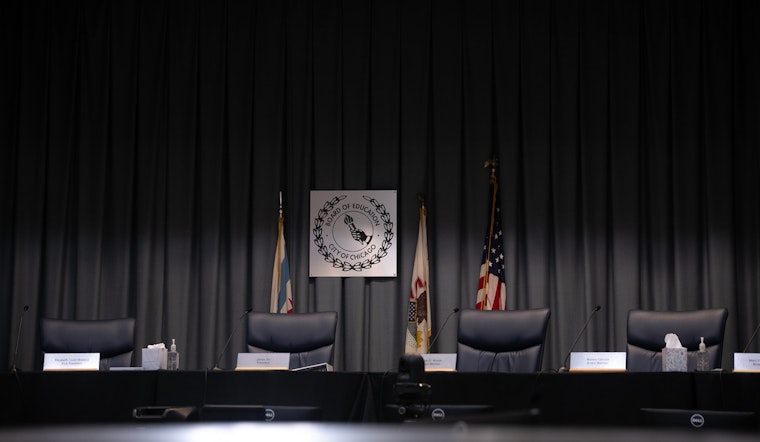
In the heated contest for the Chicago school board's 4th District seat, the dialogue is less about political affiliation and more about education policy and community representation. Karen Zaccor, a retired Chicago Public Schools teacher and union-backed candidate, finds herself squaring off against Ellen Rosenfeld, who has a mix of personal funds and contributions backing her campaign. Zaccor, with a history of advocating for an elected school board and a strong relationship with the Chicago Teachers Union, claims her alignment with the union is based on shared values, particularly regarding the provision of essential services in schools. "CTU chose to endorse me because we have the same point of view on a lot of things. So, both want, you know, social worker, nurse, counselor, librarian in every school," Zaccor told ABC7 Chicago.
Rosenfeld, though carrying the flag of a lifelong Democrat, has been dogged by campaign tactics linking her to unpopular figures and ideologies outside her stated beliefs. She stands clear on her stance on school choice, a position that, while controversial, does not directly connect her to the PACs or former President Trump, as some opponents suggest. "There isn't a desperate attempt by Mayor Johnson and by the Chicago Teachers Union to win every single seat on this board so they can continue to push forward an agenda for one party," Rosenfeld pointed out in a statement obtained by ABC7 Chicago, addressing the flyers distributed that showed her in a less flattering light.
The Chicago Sun-Times notes that the 4th District, encompassing affluent North Side communities like Lincoln Park and Uptown, is not only a battleground for two well-funded candidates but also a contest between six individuals with varying stances on education. The lakefront district hosts 33 schools, and each candidate brings their perspective as a CPS parent and educator. From Zaccor and Rosenfeld to outsiders like Carmen Gioiosa, who prides herself on independence and eschews substantial fundraising, this election is Chicago's first foray into choosing an elected school board, set to happen on November 5. All candidates share a mutual support for CPS CEO Pedro Martinez, barring Zaccor, who remains undecided on the executive's future and the wisdom of a high-interest loan for the district.
Despite the usual political affiliations and the expectancy of stability from voters, the Chicago school board race teems with underlying complexities and a search for fiscal responsibility. Andrew Davis, another candidate and advocate for merging the Chicago teachers' pension with the state's, sees local solutions to the district's budget deficit as critical. "Absent this locally paid-for obligation, CPS would gain over $500 million in funds that I would want invested in neighborhood schools," Davis proposed, as reported by the Chicago Sun-Times. With candidates ardently discussing curriculum freedom, property tax levies, and strategies to manage under-enrolled schools, the 4th District race reflects the dense weave of education politics in a city seeking firm ground for its future generations.