

























































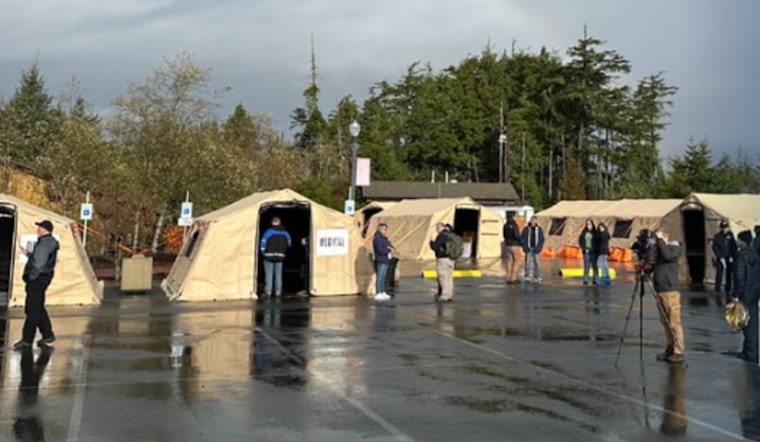
In a proactive movement to bolster readiness for a potentially catastrophic event, the Coquille Indian Tribe united with the State of Oregon to exhibit an emergency preparedness drill. This brings to the fore the setup of an Evacuation Assembly Point (EAP), a strategic initiative considered critical in the wake of a Cascadia earthquake and subsequent tsunami threats, as reported by the Oregon Department of Human Services. The EAP, a temporary meeting spot, offers refuge for communities while first responders assess and address the areas struck by disaster.
The Oregon Department of Human Services’ Office of Resilience and Emergency Management (OREM) financed the EAP equipment, now stored on tribal lands as per an agreement with the Coquille Indian Tribe. The cache, kept in sturdy metal containers, comprises essentials such as food, water, and medical supplies, adequate to sustain up to 100 individuals for two weeks. "The Coquille Indian Tribe is excited to be able to take on this responsibility which highlights what is possible when two sovereign entities work together for the common good," stated Chair Brenda Meade, according to the Oregon Newsroom.
This initiative marks the third installment of EAP equipment along the Oregon Coast, joining other prepared locations at Tillamook Municipal Airport and Newport Airport. These sites are pre-planned evacuation points, expediting the transfer of individuals away from danger zones. Oregon's coastal communities find themselves at the forefront of such planning efforts, with predictions indicating their higher likelihood of isolation post-disaster. "Coastal communities are a priority for housing EAP equipment because data indicates they are most likely to be cut off from the rest of the state in the aftermath of a Cascadia earthquake," Ed Flick, Director of OREM, told the Oregon Newsroom.
The preparedness exercise did not just stop with the setup of the EAP. Several demonstrations took place to showcase the capabilities of different emergency services. The United States Coast Guard presented their proficiency in medical extraction and search and rescue operations. CERFP demonstrated its expertise in dealing with chemical, biological, radiological, nuclear, and explosive disasters through mass care triage. Additionally, the Scappoose Fire Department highlighted its adeptness in leveraging technology by showcasing the use of an unmanned aircraft system, also known as a drone.



