

























































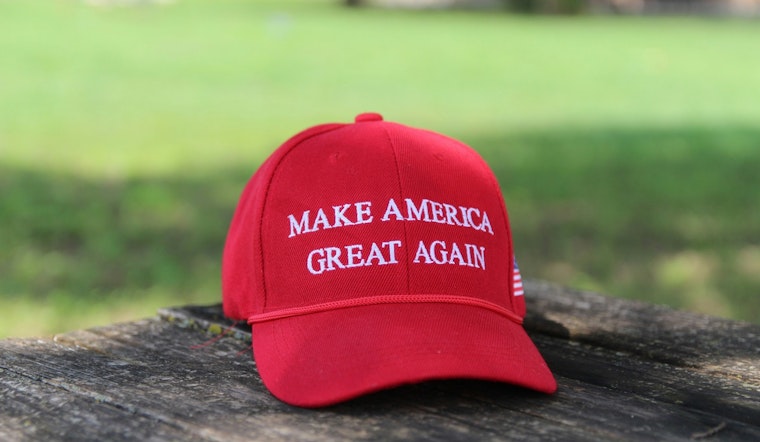
With Election Day upon us, the energies at the polls feel more akin to a sports arena, supporters clad in the regalia of their political champions. One such episode in Miami draws a stark line of distinction among states on the issue of partisan sartorial display. At a Miami Lakes-area precinct, Orlando Machado, a voter, was confronted by poll workers as he exercised his franchise while donning a Make America Great Again hat. As reported by NBC Miami, Machado claimed, "I felt attacked," when directed to leave the precinct. He insisted on his right to wear such apparel and, after being verified that he was indeed correct, Machado was allowed to proudly cast his vote in said hat.
Yet to wear, or to not wear, seems to be the question splitting many states across this loaded political landscape. According to a comprehensive look by USA Today, 21 states enforce bans on wearing campaign apparel at polling stations under the concern of electioneering. This policy could potentially impact any voter, eager to democratize their allegiances clearly upon their sleeve. The varied interpretations of what is deemed to be "campaign apparel" might range from hats, buttons, to shirts emblazoned with a candidate's last name, reflecting the complexities surrounding the act of voting in an era of heightened political expression.
But in the case of Machado and others like him in Florida, their sartorial statements made it inside the polling booth. NBC Miami elucidates that while voters are free to bring paraphernalia such as hats, buttons, and t-shirts, they are strictly prohibited from engaging in activities that might influence others' votes, like carrying signs or distributing pamphlets, within a specified perimeter of the voting site. The juxtaposition of these guidelines underscores the tenuous balancing act polling places perform between the celebration of speech and the sanctity of the vote.
In the broader context of Louisiana, a state not listed among the 21 with apparel bans, the rules still strictly ask voters to refrain from donning campaign material within 600 feet of a polling place. Joel Watson, Lousianna's Deputy Secretary of State for communications, told USA Today, "There, voters are not allowed to wear campaign apparel within 600 feet of the polls." Such mandates stand as poignant reminders that even in our zeal to physically manifest our political will, there are still lines which we are not yet to cross in the sacred dance of democracy.





