

























































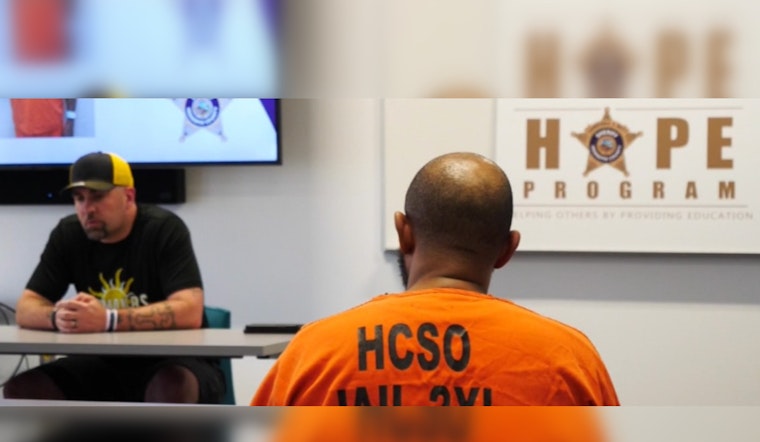
Inside the Hennepin County Adult Detention Center, a program named "HOPE", an acronym for Helping Others by Providing Education, is transforming the lives of inmates by offering educational resources and employment opportunities. HOPE is not your conventional correctional program; it seeks to actively prepare inmates for a life outside, equipping them with not only the skills to avoid recidivism but also to thrive in the community.
According to an article by CBS News Minnesota, the program's director, Sgt. Adam Hernke, is fiercely dedicated to offering inmates ways to productively fill their time while in custody. "I'm just trying to give them a resource to make a different decision that leads them in a direction that doesn't come back to jail," Hernke said. While still incarcerated, participants have access to GED courses, life skills workshops, and volunteer-led programs to better prepare to swiftly merge into society upon release.
Success stories like that of Sir Williams, a former inmate, highlight the life-changing impact of HOPE. "The HOPE Program gave me a chance,” Williams reflected in a statement released by the Hennepin County Sheriff's Office. Williams had spent a decade in and out of jail before the HOPE Program provided him with the crucial support needed to turn his life around.
Another key element of HOPE is connecting participants with local businesses and resources. Brandon Lawson, a volunteer and business owner, is dedicated to ensuring that upon release, inmates have an opportunity for decent employment. "I just try to make sure when they first get out, they have an opportunity for good employment," Lawson told CBS News Minnesota. By directly connecting individuals like Williams with job opportunities, programs like HOPE begin to break the cycle of incarceration.
The results are tangible and have a ripple effect. Thanks to the support from HOPE and individuals like Lawson, Williams is no longer just surviving post-incarceration but actually thriving, running his own new business. His testimony is a beacon of what can be accomplished when systems in place choose to actively empower rather than simply punish. It's a testament that echoes Hernke's sentiment, as he sees firsthand how the program, if utilized, can indeed foster a bridge to a new and hopeful chapter of someone's life story.





