

























































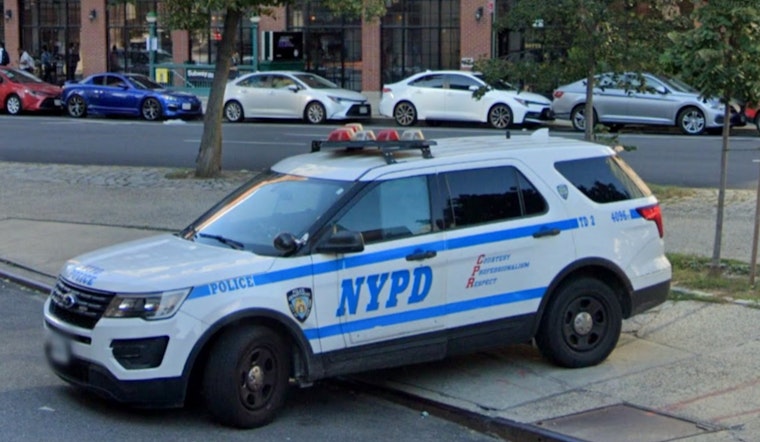
Amidst intensified scrutiny and public outcry, the New York Police Department (NYPD) has made it a declared "priority" to monitor compliance with the 14th Amendment during their stop-and-frisk practices. Acknowledging years of delay, Deputy Commissioner of Legal Matters Michael Gerber admitted to the City Council's public safety committee that the department has only now produced a draft plan to meet federal standards for constitutional policing. Gerber's concession came after a City Councilmember questioned the prolonged development of such a plan, despite over a decade passing since a federal court found that the NYPD's tactics violated citizens' constitutional rights, Gothamist reported.
Controversy continues as figures reveal a concerning trend under Mayor Eric Adams's administration; a federal monitor report released in September indicated a steady increase in stop-and-frisk incidents annually since he took office. Despite this, little to no repercussions have followed officers who fail to conduct legal searches—this, in an era when the department has been mandated to observe Fourth and Fourteenth Amendment safeguards for the past eleven years. The NYPD has been credited with implementing policy revisions, enhanced training, and some accountability measures, but federal monitors and city lawmakers urge a focus on proper officer supervision to ensure lawful stop-and-frisk procedures, as chronicled in Gothamist’s coverage.
The debate over the NYPD's strategies took a fervent turn during a heated exchange at the oversight hearing. Queen's Councilmember Tiffany Caban confronted Gerber on the department's racial profiling, responding to his defense by highlighting the disproportionate number of searches conducted on Black and Brown people. In a parallel push for transparency and accountability, multiple criminal justice reform organizations have voiced their opposition to the NYPD’s Criminal Group Database, criticizing it for perpetuating racial discrimination similar to the stop-and-frisk practices, according to Gothamist.
Revelations by Filter detailed the harsh realities of NYPD stop-and-frisk incidents, where consequences for misconduct remain shockingly scarce. The stark analysis pointed out that the majority of the people detained during the peak of stop-and-frisk received no citations or arrests, suggesting an overwhelming level of unnecessary interactions. Furthermore, the return of the “anti-crime” unit, blamed for past abuses, is seen by critics as a step backward. "You can’t create a specialized unit that engages in dragnet policing where they stop everyone, violate their constitutional rights, and then justify their actions by saying, ‘We found a gun,’" Yung-Mi Lee, a legal director at Brooklyn Defender Services, told Filter. Lee stressed the absence of a solid mechanism to hold officers accountable, denouncing the overruling of disciplinary actions even when misconduct is well-established by the Civilian Complaint Review Board (CCRB).





