

























































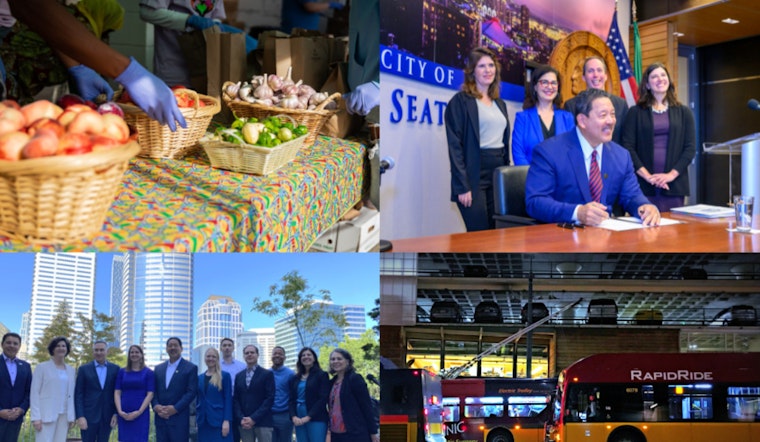
Seattle's Office of Sustainability and Environment (OSE) has wrapped up a banner year with a series of successful initiatives aimed at creating a sustainable and equitable city, detailed in a recent recap. Top of the agenda was the milestone in reducing greenhouse gas emissions, highlighted by the release of the 2022 emissions inventory, indicating ongoing efforts to meet emissions reduction targets.
In the fight against pollution, OSE saw the Building Emissions Performance Standard (BEPS), inked into law in the previous year by Mayor Bruce Harrell, moving full speed ahead, aided by millions in federal funds to reduce emissions and foster local clean energy jobs; notably, the U.S. Department of Energy awarded $17.2 million for enhancing buildings in overburdened communities and the Federal Emergency Management Agency chipped in $5.5 million for air conditioning in public libraries.
Bringing cooling and better air quality to homes, the ‘Clean Heat’ initiative pushed forward, steering the city away from oil heating, with more than 250 rebates distributed to help households transition to electric heat pumps, thus avoiding the use of approximately 162,500 gallons of oil in 2024 alone, as reported by OSE.
On the transit front, April bore witness to the release of the Transportation Electrification Blueprint update, tracking the city's progress in electrifying the transportation sector; installations of electric vehicle chargers and successfully diminishing emissions from truck deliveries were some of the strides made, making Seattle's transit simultaneously cleaner and more accessible. With climate and environmental justice core to the city's ethos, OSE dispersed $1 million through the Environmental Justice Fund to 17 community groups and awarded $250,000 to support eight projects serving the Duwamish Valley, as part of broader efforts to confront environmental injustice in one of the city's historically marginalized areas.
Further, Seattle's Green New Deal Oversight Board galvanized union workers and residents in a series of assemblies to draft up climate solutions, setting a just transition off fossil fuels into motion, complemented by a $2.2 million investment into the Clean Energy Training and Career Pathways program, which saw nearly 150 trainees this year engage, aligning with the city's vision of creating green jobs and climate resilience articulated by OSE.
Lastly, Seattle is not only about cutting emissions but also nurturing green spaces, with a $12.9 million foresting grant in 2023 underpinning a citywide tree planting initiative, as noted by OSE. Keeping an eye on sustenance, the updated Food Action Plan prioritizes accessible, affordable, and culturally relevant food options, echoed in Mayor Harrell's words, "We are building a City where all communities have access to fresh, affordable, and culturally relevant foods regardless of their race, neighborhood, or income," underscoring Seattle's dedication to equity in food resources.
As the City of Seattle looks ahead to 2025, OSE is gearing up to continue enhancing and innovating its programs to ensure a future that is not only greener but aligns with the broader goals of sustainability and social justice.





