

























































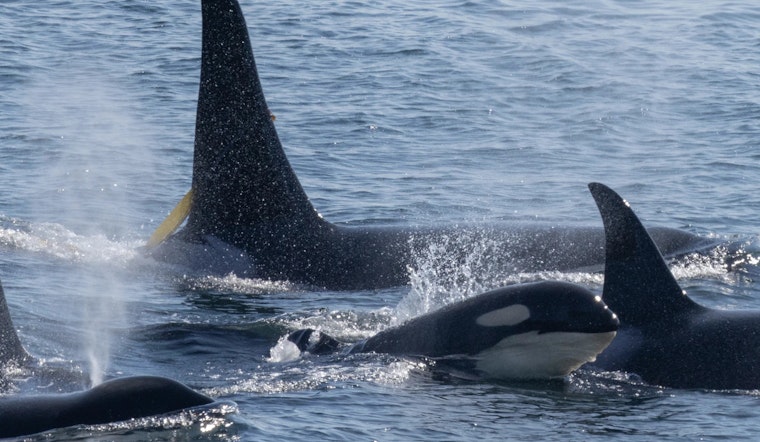
As the new year rolls in, Puget Sound's Southern Resident killer whales (SRKW) will be getting some much-needed breathing room. A recent mandate detailed on the Washington Department of Fish and Wildlife website announces that starting January 1, 2025, boaters will be required to stay a minimum of 1,000 yards away from these endangered orcas. This protective measure is designed to curb the harmful effects of vessel noise and interference on the whales' natural behaviors.
Dr. Julie Watson, linked with WDFW, expounded that toxic contamination, the dearth of prey, and vessel noise are the triumvirate of threats that loom over the whales. She stated, "WDFW and partners are working to address these threats, and this new 1,000-yard buffer is a major step in reducing the impacts of vessel disturbance on SRKW behavior." According to a statement obtained by the WDFW, their studies have demonstrated that quieter waters bolster the whales' ability to hunt and communicate, which are critical for their survival.
The stipulations of the law are all-encompassing, encompassing motorized and non-motorized vessels, including kayaks and paddleboards. It stipulates that in the presence of these creatures, crafting an escape strategy, one must navigate at no greater than 7 knots if not closer than 1,000 yards, yet further than 400 yards. Alan Myers of WDFW Enforcement explained that the officers' primary focus is not punitive but educational for the incoming boating season. "We will issue citations when necessary, especially for egregious violations or repeat offenders, but our officers will largely be focused on making sure people understand the new laws and are trying to do the right thing by giving these whales the space they need," Myers said, emphasizing the need for boater compliance.
Though these rules specifically protect SRKW, Watson notes the challenges in identifying them from other orca populations, especially from beyond 1,000 yards. She highlights, "There are some physical differences between SRKW and transient killer whales,” Watson said. “However, seeing these differences from outside 1,000 yards may be difficult, so we’re encouraging boaters to treat all unidentified killer whales as though they’re SRKW and opt to stay 1,000 yards away."
For those immersed in the nautical community or with an inkling to learn more, WDFW's nascent ambassador program offers education on best practices for cohabiting the waters with these orcas. Interested individuals are welcome to join the Southern Resident Killer Whales and Regulation Updates mailing list. Moreover, WDFW has submitted an adaptive management report with insights into compliance with the current SRKW-related vessel regulations and draft revisions for commercial whale-watching rules. A public comment window will coordinate with a briefing on the proposals set for January 10.





