

























































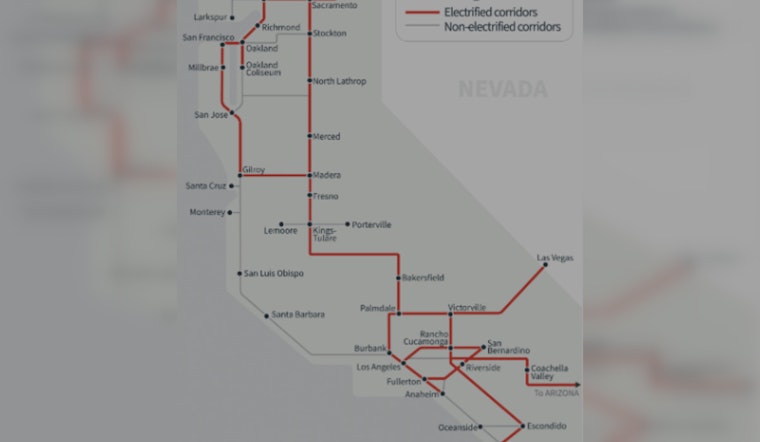
California has set its eyes on a future where diesel fumes and traffic jams are left behind, as Governor Gavin Newsom unveiled a State Rail Plan that promises a zero-emission, fully connected rail network by 2050. In a bid to modernize transportation across the Golden State, the governor announced these ambitions following his hands-on participation with local leaders and workers, marking the initiation of track laying for the state's high-speed rail system, which is touted to be the backbone of the envisioned network. Details of the plan, which aims to create up to 900,000 jobs, were released on the governor's official website.
The holistic scope of the plan seeks to transition Californians from their dependency on road and air travel to a more sustainable and connected rail experience, providing mobility to every region with the integration of intercity, regional, and local transit systems, as per the Governor's Office.The initiative is more than just laying tracks and operating electric trains; it’s a vital part of the Governor’s "Build More, Faster" strategy, designed to accelerate infrastructure improvements and boost job creation across California. For further details, visit build.ca.gov.
Transportation Secretary Toks Omishakin stated, "Under Governor Gavin Newsom’s leadership, the State’s long-range Rail Plan released today outlines how CalSTA’s plan to strategically leverage rail and transit to enhance quality of life for every Californian," as stated by the Governor's Office, highlighting the commitment to transcending current standards to improve access to multimodal options, air quality, and equitable job opportunities. The vision also addresses the needs of historically underserved communities by increasing their access to affordable and frequent rail services. This aligns with the Governor's sentiment that, as the world’s fifth-largest economy rich in talent and innovation, California is ready to embrace this monumental challenge.
The plan is not just about people moving but also addresses the movement of goods, aiming to optimize the integration of freight to rail where possible, striving for economic and environmental efficiency, incorporated with measures to ensure climate resilience against risks such as sea-level rise, wildfires, and flooding. With a colossal direct capital investment of $310 billion expected from various funding sources, the State Rail Plan estimates a return of over $540 billion by 2050, while substantially adding employment in construction, maintenance, and operations realms, signifying a significant economic impetus for California.




